Donald Norman Quotes
I'm not a fan of technology . I'm a fan of pedagogy, of understanding how people learn and the most effective learning methods. But technology enables some exciting changes.
Norman, Donald A. Things That Make Us Smart: Defending Human Attributes in the Age of the Machine. Addison-Wesley, 1993.


The first Jewish Publication in the United States


Traditional Islamic education of the time only dealt with the Koran but the skills of modern life, medicine, law, science were taught in the British secular schools, which Muslims generally would not attend. Kahn urged all is fellow Muslims to benefit from all forms of education.


Brunner and B. F, Skinner were the two most preeminent learning psychologists of the day. They were intellectual opponents, but both agreed with this principle, Amazing demonstrations of this principle are available throughout history. However, apparently the cost to do it can be huge and as of 2012 there has been no overall success on a large scale of the general proposition. On the other hand, set theory has been taught to Junior High School students well, and calculus is taught in many American high schools. However. while there are these spectacular results, the American education system of the early 21st century has been unable to produce basic arithmetic and algebra skills in over 20 percent of the population.


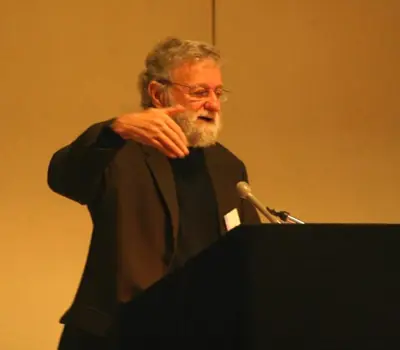
Donald Arthur Norman is an American researcher, professor, and author. Norman is the director of The Design Lab at University of California, San Diego. He is best known for his books on design, especially The Design of Everyday Things. He is widely regarded for his expertise in the fields of design, usability engineering, and cognitive science. He is a co-founder and consultant with the Nielsen Norman Group. He is also an IDEO fellow and a member of the Board of Trustees of IIT Institute of Design in Chicago. He also holds the title of Professor Emeritus of Cognitive Science at the University of California, San Diego. Norman is an active Distinguished Visiting Professor at the Korea Advanced Institute of Science and Technology (KAIST), where he spends two months a year teaching.
