Robert McNamara Quotes
I'll be quite frank. I don't think there is a military problem here. This is a domestic, political problem for us.
Robert McNamara,1916-2009, U. S. Secretary of Defense (Democrat), White House Meeting on the Cuban Missile Crisis, October 16, 1992
Sourced by: Eigen's Political and Historical Quotations

This was a private speech he made to his corruption inspectors. At this point in time, there was extensive corruption of the millions of local officials of the ruling Communist Party then a generation of two from the idealism of the original communists who fought in the Chinese Revolution. The common people were beginning to complain and demonstrate against local officials who were making things worse by what even the heavy handed Chinese party leaders considered heavy handed. The inspectors were coming under great pressure as the anti-corruption campaign was producing a blowback from local officials and the corrupt officials were so numerous that they could represent a destabilization threat in a political culture where stability was the highest priority. The anti-corruption campaign was an attempt to regain “party discipline”. See Quotation 643893.


Sowell’s definition of “degeneracy” seems to be departing from his ideal version of proper views and action.

The Empress had earlier decided not to try and suppress the Boxers when they started attacking foreigners--{641838}. But now things had gotten out of hand and many ordinary Chinese people—especially Chinese Christians-- were suffering Boxer abuse. Cixi thought the government had to “ally” with the Boxers in the hope that she could influence directions in the future. This, of course, made her anathema in the West and forever damaged her reputation and legacy in Western history.


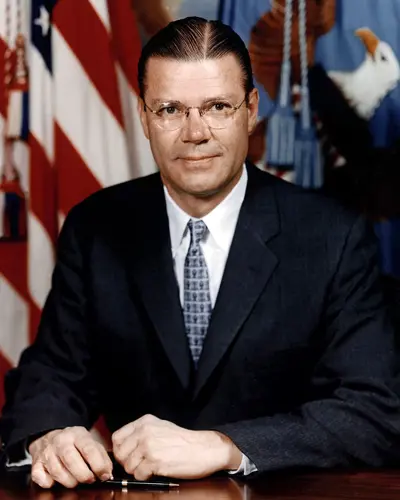
Robert Strange McNamara was an American business executive and the eighth United States Secretary of Defense, serving from 1961 to 1968 under Presidents John F. Kennedy and Lyndon B. Johnson. He played a major role in escalating the United States' involvement in the Vietnam War. McNamara was responsible for the institution of systems analysis in public policy, which developed into the discipline known today as policy analysis.
