George Eliot Quotes
Ignorance is not so damnable as humbug, but when it prescribes pills it may happen to do more harm.
Eliot, George. Middlemarch. Vol. 1, William Blackwood and Sons, 1871, p. 250.


Huntington, one of the better known political scientists had been nominated for admission as a fellow of the National Academy of Sciences. He was generally considered a shoe-in. However, some of his research had used extensive mathematical analysis to prove his conclusions. Lang a gadfly had actually read Huntington’s peer reviewed published Journal articles and found that the mathematics was very faulty, both in its application and execution. He opposed Huntington’s election and proceeded to present Huntington’s mathematics and conclusions to the members, who were themselves the best scientists of many different disciplines. They all realized that the Huntington work was incorrect. Huntington argued that as a Political Scientist he was using mathematics as a way of conceptually illustrating his points and not in a rigorous manner. Huntington was not elected to the academy. Lang frequently would take scientific evidence offered in Congressional Hearings, analyze it and then send a package to the media and members of Congress showing the errors. See {508154} for his cutting style with poor science.


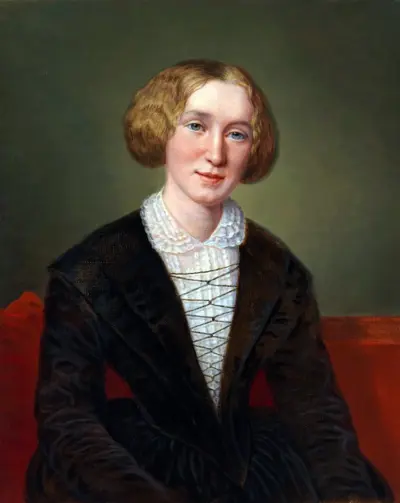
Mary Ann Evans, known by her pen name George Eliot, was an English novelist, poet, journalist, translator and one of the leading writers of the Victorian era. She wrote seven novels, Adam Bede (1859), The Mill on the Floss (1860), Silas Marner (1861), Romola (1862–63), Felix Holt, the Radical (1866), Middlemarch (1871–72) and Daniel Deronda (1876). Like Charles Dickens and Thomas Hardy, she emerged from provincial England and most of her works are set there. They are known for their realism, psychological insight, sense of place and detailed depiction of the countryside.
