Thomas Friedman Quotes
If you’re a Chinese mayor and have to choose between growing jobs and cutting pollution, you will invariably choose jobs: Coughing workers are much less politically dangerous than unemployed workers.
Thomas Friedman, Foreign Affairs Columnist and Journalist, Quoted in “The Power of Green,” New York Times, April 2007
Sourced by: Eigen's Political and Historical Quotations


This was the first time that the Environmental Protection Agency had vetoed a permit for a mountain top removal coal mining project that had been granted by the Army Corps of Engineers. The proposed project, Spruce 1, would have removed the entire top of a mountain. It would have created a number of jobs, but it also would have polluted a number of streams in the area and would have affected the ground water of people in the area. What made this a most difficult political decision was that the economic damage was clear as was the science showing the water damage. The people in the community were split over which was the worse alternative.


The Peoples’ Daily is an official Communist Party Outlet.


Smith was the author of a major biography on Nelson Rockefeller who although a Republican advocated higher taxes to pay for what the pubic wanted from government and was one of the first politicians to seriously deal with assuring clean water.


This is an example of a fascinating one-sided logic. At the time, the Chinese were, not the largest, but one of the large holders of American short term debt. It made sense to the Senator to borrow money from China to have military bands and orchestras and sports teams; it made sense to borrow money to give tax subsidies to wealthy corporations and all the other things. To him and many well off people, it certainly didn’t make sense. To the people who were unemployed or at risk of employment, or those who were empathetic with them, it made a great deal of sense.


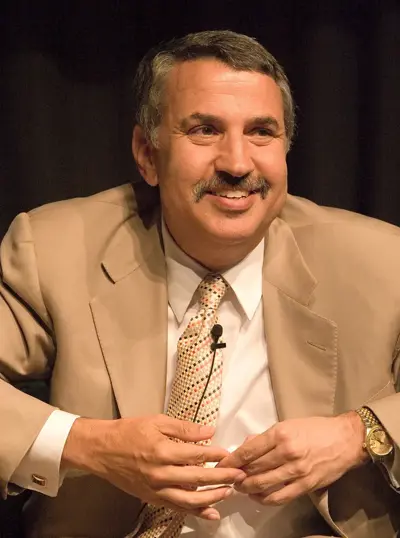
Thomas Loren Friedman is an American political commentator and author. He is a three-time Pulitzer Prize winner who is a weekly columnist for The New York Times. He has written extensively on foreign affairs, global trade, the Middle East, globalization, and environmental issues.
