Olga Tokarczuk Quotes
If your country is wiped off the map and your language is banned, if your literature has to serve a cause, it becomes, however brilliant, rather hard to travel.
Armitstead, Claire. "Olga Tokarczuk: 'I was very naive. I thought Poland was able to discuss the dark areas of our history'." The Guardian, Guardian News & Media, 20 Apr. 2018.


This has been a classic dilemma for all large multi ethnic states—trying to develop a sense of unity of citizenship in the face of populations who think of themselves foremost differently. Attempts like this of banning the names of the peoples from official use, banning languages, changing people’s names, requiring common dress and other such methods have failed in most cases (Ataturk’s Turkey being the notable exception). America, Great Britain and the Soviet Union showed the world that it was possible to have a strong sense of national unity and at the same time allow peoples, cultures, and ethnicities to maintain their own ethnic identities. However, many modern governments see their situation as so unique that ethnic repression of one kind or another is required. Modern China, in particular, while not as extreme as Sun Yat-Sen still makes it very difficult for certain cultures to thrive such as the Tibetans. Note that even in the United States we have many who argue that non English language usage should be discouraged and disapprove of the concept of hyphenated Americans. For example, see Theodore Roosevelt {631377}.


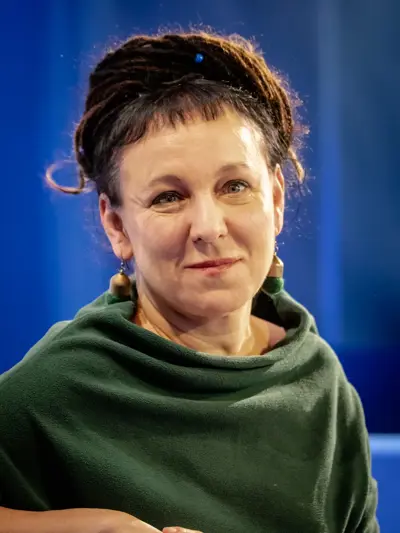
Olga Nawoja Tokarczuk is a Polish writer, activist, and public intellectual who has been described in Poland as one of the most critically acclaimed and commercially successful authors of her generation. In 2018, she won the Man Booker International Prize for her novel Flights (translated by Jennifer Croft). In 2019, she was awarded the 2018 Nobel Prize in Literature.
