John Eaton Quotes
If you will go to the setting sun there you will be happy; there you can remain in peace and quietness. So long as the waters run and the oaks grow that country shall be guaranteed to you and no white man shall be permitted to settle near you.
The Cherokee tribe of Georgia had their government abolished by state law, their meeting prohibited, their land taken and they were urged to migrate to land west of the Mississippi. The federal government promised:. See Lewis Cass for a similar, unequivocal unkept promise.
John Henry Eaton, 1790-1856, Secretary of War (Democrat), Governor of Florida, U. S. Senator, Promise to Cherokee Nation
Sourced by: Eigen's Political and Historical Quotations

Cass was negotiating with the Shawnees and Cherokees to persuade them to move to land west of the Mississippi. See John Henry Eaton for similar unkept promises.

The whites had constantly encroached on the Cherokee land which was too large for any reasonable patrolling by the Indians themselves. The Federal government persuaded the Cherokee to sign a treaty by which the Indians would give up their title to the larger part of their land. The most important quid pro quo was that the Federal Government would protect the remainder of the Cherokee land from incursion by whites or even other Indians. However, whites who coveted the land started to encroach and build farms and ranches. The Federal government was reluctant to use American soldiers against American citizens and was looking for a way out. However, the Cherokee chiefs were reminding them of their obligation. The state governments were less concerned about Federal treaties, and Georgia passed a law that said that all the Cherokee land must be governed by State Law contrary to the Treaty which gave the Cherokee total sovereignty. But the Feds were not anxious to have a showdown with the states on this issue. Whites, with the connivance of the state governments and the support of some Federal Officials offered to amend the treaty with the Cherokee. The whites would pay the Indians fair market value for their land in the East. The Federal Government would provide equal amount of land in the Indian Territory of Oklahoma, then a territory. The Feds would assist with the relocation and provide troops to protect the Cherokee from thieves and raiders—whites and Indians, and would guarantee that the Cherokee would be completely sovereign in the new land. The chief’s did not want to renegotiate the old treaty—they just wanted it enforced. The Supreme Court ruled in their favor, but President Jackson, ignored the ruling and forced the Cherokee onto the Trail of Tears for Oklahoma and the whites took over the valuable Cherokee land.

This is one of the first Policy Statements of the new Republic about the Indians. Essentially, although the government policy was reasonable and fair, public opinion was totally different and the leadership could not persuade the people on this point. One complicating factor was the fact that most of the Indian tribes had overtly or covertly sided with the British in the Civil War. Many Indians were exiled to Canada. Even the Indians who were American allies, had their lands encroached upon however.


This law governed the territories outside of the original 13 colonies. The intentions of the founding fathers and the first Congress to the Indians was fair and honorable. However, there was no practical way that the new Federal Government could enforce this principle in the territories. A single greedy land speculator or trader could abuse a group of Indians and start a small war. The vast cultural differences between Indians and whites tended to polarize all violent conflicts regardless of who was at fault. The different perceptions of cruelty and atrocities further pushed the government to defend whites violating national policy and there was sufficient corruption and money to be made on Indian land and trading and things went downhill fast.


There was then legislation proposed to to nullify a number of Indian treaties. Indians themselves were divided as to the desirability. Mrs. Roosevelt favored negotiations and discussions with each tribe separately regarding their treaties as opposed to the proposed legislation which treated the tribes monolithically when indeed they were 500 separate tribes with different cultures, needs and desires.
The intentions of the Founding Fathers towards the Indians was decent, respectful, and well intentioned. However, there was not enough of a system of enforcement or the will to enforce when the greed of the average whites grew too great. Many settlers saw these vast lands and could not see any harm in using a few acres for their farm. And if there had been only a few, there would have been little trouble. However, the settlers kept coming and coming and soon the Indians began to push back. In a sense, it was a class problem. The members of the Continental Congress who wrote the Northwest Ordinance were educated, affluent men who had plenty of land. Most of the men who contested for the Indian lands had little land or were newly affluent and saw few limits to America.


While Jefferson was clear on this point, there were other forces and points of view that did not recognize Indian rights and were prepared to use force to obtain Indian lands. These, together with some Indians who made bad and sometimes corrupt bargains and treaties ceding land, produced the loss of most of the Indian land in America.


There were a few members of Congress who were distressed at the deception that was very often used in negotiations with Indians. They never were a sufficient majority to pass serious, meaningful legislation.
This was passed in 1787 before the Constitution had become operative, but was then ratified by Congress in 1789. It was one of the first acts of our new nation, and one of the most frequently violated throughout our history.


The central Indian policy problem for Jefferson’s Administration was the fact that most Indians hunted for subsistence and the amount of land needed to support a hunting society was per capita much greater than an agricultural and especially an industrial one. Jefferson had no personal animosity against the Indians as many in his day did. But he perceived the need to obtain Indian lands for white agricultural use.


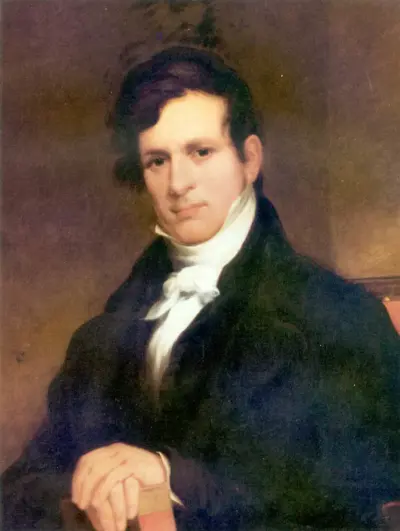
John Henry Eaton was an American politician and diplomat from Tennessee who served as U.S. Senator and as Secretary of War in the administration of Andrew Jackson. He was 28 years, 4 months, and 29 days old when he entered the Senate, making him the youngest U.S. Senator in history.
