John F. Kennedy Quotes
If you tell everybody that you like me better than [Richard M.] Nixon, I'll be ruined at home.
See {609999} , {624747} , {45720} for more quotations regarding the summit meeting.
John F. Kennedy, 1917-1963, 35th President of the United States (Democrat, MA), Remark to Russian Premier Nikita Khrushchev, Vienna, Austria, June, 1961
Sourced by: Eigen's Political and Historical Quotations

When the President met Nikita Khrushchev for talks, the Premier was wearing medals on his chest. Kennedy inquired what they were for, and the Premier explained that they were Lenin Peace Medals: See {610011} , {624747} , {45720} for more quotations regarding the summit meeting.

This was the address where FDR used the “arsenal of democracy” phrase which became so famous. A similar phrase was used in May by Robert E. Sherwood--{624748}. Then Jean Monnet began to use the exact phrase in Mid 1940--{624746}. He almost certainly had read Sherwood’s earlier, similar phrase. However so had Presidential Aid Harry Hopkins who thought that it would be a good phrase for President Roosevelt to use to “brand” the activity of the United States. So diplomatically, Monnet was asked not to use the phrase any more, and he acceded to the request. At the end of the year, FDR gave his address with this quotation.

The Russian leadership thought little of it and assumed that it had no consequences. An American Communist official in the Kremlin, Morris Childs, told them that Nixon might actually lose his job over Watergate. Childs was actually an FBI spy. See his quote.


Nixon had lied to Ford as well as the American people. Ford, having been selected by Nixon as VP, felt it was his obligation to defend Nixon until he was about to become President himself. At that point he would have destroyed his presidential credibility on top of Nixon if he kept on with the Nixon lies.


In 1963 Great Britain was rocked by the Profumo affair where the Defense Minister and a Russian officer were sharing the same mistress.


President Johnson was trying to organize peace talks in Paris. Nixon didn’t want a public announcement to occur before election day when he was running against Hubert Humphrey. Knowing the South Vietnamese President was reluctant to go to Paris but was under pressure from America to do so, he sent a message through Chennault that he should not accept and “hang on” as Nixon would shortly win. The South Vietnam president refused to go to Paris, Nixon won the election, and then had to cope with the continuation of the war that might well have ended before he took office. Nixon believed that he could get Russia and China to pressure Ho Chi Min to make peace. Nixon's private overtures to the South Vietnam president, violated the Logan Act which prohiited private citizens negoatioating with foreign governments. President Johnson was aware of Nixon's commission of this felony want wanted to prosecute him, but the evicence had been obtained from secret intelligene agency bugging and wiretapping both the South Vietnam Embassay in Wishington and the Presidential Palace in Vietnam the public knowledge of which would have caused a scandal. Instead, he called Nixon and warned him to stop, but the damage had already been done, and the South Vitenamese government would not go to Pariis where they would have to agree to a coalition government with the Communists. THey waited for Nixon to deliver a peace treaty which would leave them in charge of South Vietnam. In the final analysis, the South Vietnamese ended up with nothing and no participation in anything when the U. S. Withdrew and the Communists took over.

The “Cliveden Set” {598323} was in favor of the policy of appeasement. The name came from the seat of Lord and Lady Astor, who were both supporters of the policy. The policy of appeasement was later seen as a big mistake because it prevented early Allied involvement in World War II and therefore gave Hitler time to buildup the German military while invading much of Eastern Europe.

During his 1976 presidential campaign, Carter told reporters that they had treated him very well so far. "Compared to what?" asked one reporter. Carter shot back:


Hartman and the other few advisors who Ford had consulted had opposed the idea of a Nixon pardon. However, Ford went ahead with it, and it probably cost him the reelection. Most people two decades later tended to agree with Hartman’s later view in this quotation.


Oz ofent wrote very effective scathing criticism of the policies of the right wing governmetns of Israel and the ultra orthodox who argued that God gave the Jews Judea and Sammaria which is now the West Bank and has been occupied by Arabs for more than 1500 years.

He was asked if he supported President Donald Trump, whose first 100 days was in the view of most political analysts, historians and many politicians--almost all Democrats and even many Republicans to be one of the worst on record. His popular approval rating was the worst after 100 days than any other President since support polls had been started. Kasich had stringly opposed Trup in the 2016 election. His answer reflected his view that al should support whatever president was in office even thought they might at the same to be very critical and opuitspoken about his weaknesses and failings. The President is everyone's President even though he may not act like it.


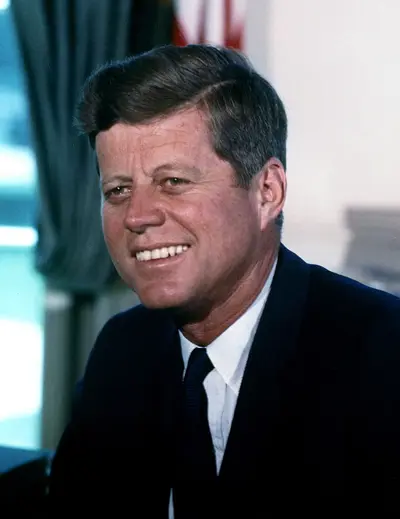
- Born: May 29, 1917
- Died: November 22, 1963
- Nationality: American
- Profession: President
John Fitzgerald Kennedy, often referred to by his initials JFK, was an American politician who served as the 35th president of the United States from 1961 until his assassination in 1963. Kennedy served at the height of the Cold War, and the majority of his work as president concerned relations with the Soviet Union and Cuba. A Democrat, Kennedy represented Massachusetts in both houses of the U.S. Congress prior to becoming president.
