Mahatma Gandhi Quotes
If you must kill English officials, why not kill me instead?
Gandhi, Mahatma. The Collected Works of Mahatma Gandhi. Vol. 25, Publications Division, Ministry of Information and Broadcasting, Government of India, 1967, p. 365.


In the many terrorist attacks on Israel and the Israeli retaliations and prevention, some innocent civilians have been killed when the Israelis have made a targeting or other mistake. In contrast, the innocent civilians of Israel have been targeted and killed by suicide bombers and random rocket attacks where the intended and announced purpose of the attacks was to kill and maim as many civilians as possible.


See Robert F. Kennedy for a later expression of this sentiment. 1st Earl of Beaconsfield

The statement was made with respect to the possible overthrow of President Diem of South Vietnam, who was murdered anyway during the coup.


The violent IRA logic had always been a little tortured. At the time, the claim was that the British were not wanted in Ireland but were there only by force of arms. However, the British administration of Ireland at the time was not forceful or violent at all. Few others had the freedom and democracy of Ireland as a part of Great Britain. De Valera’s logic was that if the British in Ireland were subjected to violent, terrorist attacks, they would respond with force of arms, and thus show that they held Ireland by force. Most of the Catholics of Ireland preferred independence while most of the Protestants preferred the relationship with England.

Pinkerton worked out a plan to spirit Lincoln through Baltimore where he had to change trains.


He was commenting on Lord Castlereagh's use of bribery to pass the Irish Act of Union. His observation of the immorality of politics was dramatic in that he observed that it was similar to the immorality of war.

Upon landing, he was killed by a political assassin's bullet.


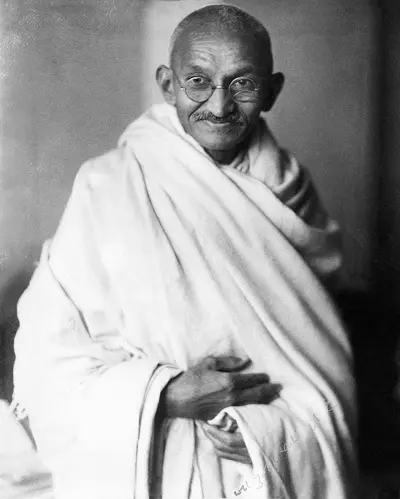
Mohandas Karamchand Gandhi was an Indian lawyer, anti-colonial nationalist, and political ethicist, who employed nonviolent resistance to lead the successful campaign for India's independence from British rule, and in turn inspired movements for civil rights and freedom across the world. The honorific Mahātmā (Sanskrit: "great-souled", "venerable"), first applied to him in 1914 in South Africa, is now used throughout the world.
