Epictetus Quotes
If you hear that someone is speaking ill of you, instead of trying to defend yourself you should say, he obviously does not know me very well, since there are so many other faults he could have mentioned.
Epictetus, 60-140, Phrygian Stoic Philosopher, Enchindion
Sourced by: Eigen's Political and Historical Quotations


Battle was the grandson of a Revolutionary war soldier and the son of a former slave. He was the first person inducted into the New York City Police Force when it was first organized after the consolidation of the boroughs in 1898. He became the first Black Police Sargent and the first Black Lieutenant of the city and was probably the only Black senior police officer in the country at that time.


Leo the Great. Saint Peter was the first head of the Catholic Church—the Pope. Pope Leo observed that the Papacy and the church itself is not permanently diminished just because a particular pope is corrupt or unworthy. This is a principle that has been accepted by most governments regarding their heads of state. A particular bad President for example, does not mean the Presidency is bad.


Arguing to impeach President Thomas Jefferson:

There is a corollary to this proverb, that frequently reflects itself in Arab culture. It is that one who is not strong must never concede. To concede out of strength is manly and noble. To concede out of weakness is cowardly and base. Middle Eastern International politics is totally irrational to Westerners when a badly defeated country of group will often not even meet with the victors to discuss peace or terms of surrender. It is the victors only who can make concessions without losing dignity and respect.


Samuel Langhorne Clemens, 1835-1910

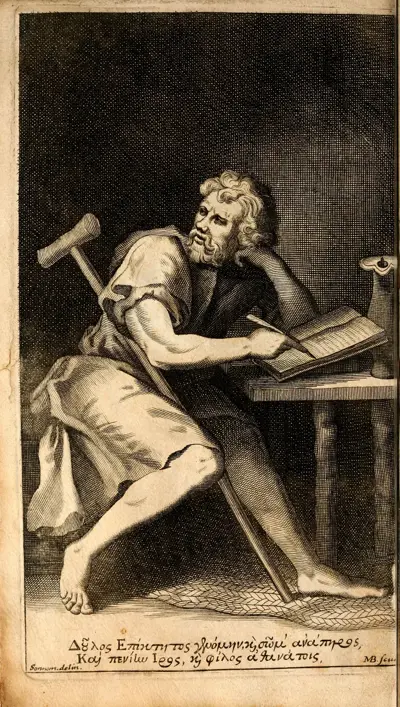
Epictetus (/ˌɛpɪkˈtiːtəs/; Greek: Ἐπίκτητος, Epíktētos; c. 50 – c. 135 AD) was a Greek Stoic philosopher. He was born a slave at Hierapolis, Phrygia (present day Pamukkale, Turkey) and lived in Rome until his banishment, when he went to Nicopolis in northwestern Greece for the rest of his life. His teachings were written down and published by his pupil Arrian in his Discourses and Enchiridion.
