Bernard Malamud Quotes
If you ever forget you're a Jew, a Gentile will remind you.
Malamud, Bernard. The Fixer. Farrar, Straus and Giroux, 1966, p. 227.


The term “gentile” was used in the Old Testament to indicate someone who was not of God’s Chosen People—one who was not a Jew. But the Mormon’s used the Biblical term to refer to people who were outside the Mormon faith. When Bamburger ran for the Governorship, there had been only one other Jewish governor in America. At a campaign rally a Mormon anti-Semite called him a “Damned Gentile.” This reply was typical of his humor, and the majority of the state voters and the Mormons voted for him making Bamburger the second Jewish Governor in America.

This quotation was used by the Lyndon B. Johnson 1964 Campaign as: “We represent the majority of the people in Alabama who hate niggerism, Catholicism, Judaism, and all the isms of the whole world.” So said Robert Creel of the Alabama Ku Klux Klan. He also said, “I like Barry Goldwater. He needs our help.” The second statement was made at a different time.

In his early years, Stalin was a strong opponent of Anti-Semitism ({627514}) but he felt he needed to make a pact with Nazi Germany—the Hitler-Stalin Pact. In meeting with Nazi Foreign Minister Ribbontrop, Stalin as a quid pro quo promised to get rid of “Jewish Domination” (which never existed but there were many Jews in positions) among officials and intellectuals. He then fired his Jewish Foreign Minister Litvonof and replaced him with Vyacheslav Molotov to whom he have this instruction. This was the first major official Anti-Semitism of the Soviet Union but it continued thereafter. See {636526} & {636527}.


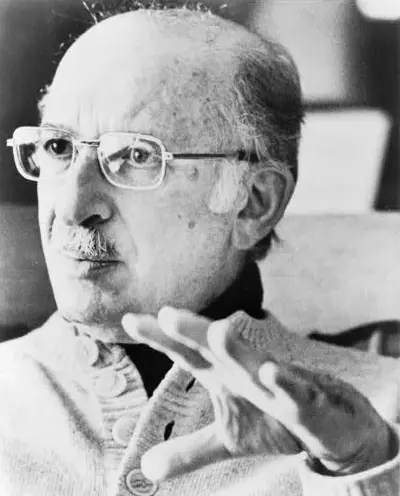
Bernard Malamud was an American novelist and short story writer. Along with Saul Bellow and Philip Roth, he was one of the best known American Jewish authors of the 20th century. His baseball novel, The Natural, was adapted into a 1984 film starring Robert Redford. His 1966 novel The Fixer (also filmed), about antisemitism in Tsarist Russia, won both the National Book Award and the Pulitzer Prize.
