J. P. Morgan Quotes
If we have done anything wrong, send your man to my man and they can fix it up.
Morgan, one of the biggest industrialists in the nation, had been running vicious monopolies and trusts at a time when government regulation was a new concept. Morgan’s response was to have one of Roosevelt’s assistants make a deal with one of his assistants. He was shocked when Attorney General Knox said, “We don’t want it fixed up. We want to stop it.” They did. It was a watershed in government corporate regulation.
J. Pierpont Morgan, 1837-1913, Financer and Industrialist, Statement to President Theodore Roosevelt and Attorney General Knox
Sourced by: Eigen's Political and Historical Quotations


When whites first came to America, the Iroquois, were the most sophisticated Native Americans. They were actually a confederation of 5 different tribes each of which was composed if many clans. Although fierce warriors, they had agreed not to fight each other and to assist if any were attacked. They developed a strong agricultural base, to go with the fishing and hunting, and their confederation were very aggressive and sophisticated traders taking them far from their upstate New York “capitol.” Their governmental structure was quite sophisticated with an elaborate, formal, system of checks and balances, multi-cameral legislatures that recognized numbers of citizens, power and wealth, and even cultural traditions. They were literate, capitalistic and globalistic in that they wanted to trade with all. They had written laws, and women had a role that was unique in world history in that only women owned property in a matrilineal society. Further, it was only the Clan Mothers who voted for the 50 Sachems (~Senators)—but their selections had to be accepted by the people they represented. Ironically the descendants of the Iroquois who remained in New York became a very successful Native American group. In the 2000 census, the average Indian in New York State earned the same income as the average White with no Indian gambling money.

Shlomo ben Yitzchak

She saw strikes as wasteful where the workers and the companies, the public and the government lost. She favored arbitration which was generally opposed by labor and management and still is today in most cases.


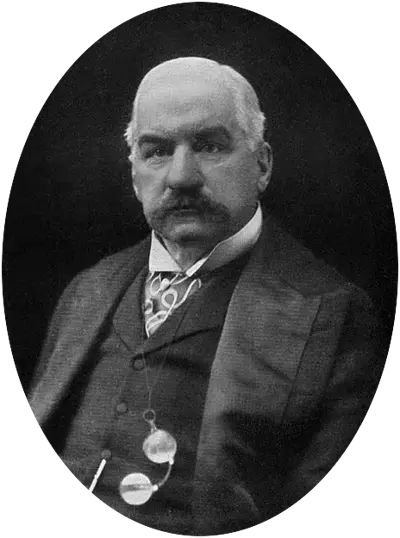
John Pierpont Morgan was an American financier and banker who dominated corporate finance on Wall Street throughout the Gilded Age. As the head of the banking firm that ultimately became known as J.P. Morgan and Co., he was a driving force behind the wave of industrial consolidation in the United States spanning the late 19th and early 20th centuries.
