John Kerry Quotes
If we do not act now, we will become spectators to slaughter.
John F. Kerry, U. S. Secretary of State (Democrat), U.S. Senator (Democrat, MA), Advocating the use of military force against the Syrian Government for using weaponized saran gas against his own people in the Syrian Civil War, September 2013
Sourced by: Eigen's Political and Historical Quotations

The Christian Crusaders had captured Jerusalem and slaughtered the Muslim civilian inhabitants. In the 21st century, some Islamic terrorists justified the beheading of captured Christian prisoners as revenge for this massive Christian beheading of Muslims almost 1,000 years earlier.
14 Arab Armies in a coordinated attack on the 1 day old Israeli state, intended to massacre all the Israelis as demonstrated by this quote. Note that this kind of extermnination intent was advertised with pride. To everyone's surprised, the Jewish defenders not only beat back the viscious attacks but enlssarged their terroitory by capturing strategic sites from which the attacks had been launched. Many people credit to the Israely victory to the fact that they were litterally fighting for their lives. Defeat would have meant death for them and their families. The Arab armies, in contrast, were fighting for land that other Arabs claimed that should have been theirs. The willingness to stand and fight for this goal did not match the self preservation that motivated the Israelis--especially in the aftermath of the Holocaust killing 6 million Jews in WWII.
There are some who argue that the quotation was made earlier and was not meant as an incendary call for massacre of Israelis. It well may be that in his original thinking, he was predicting what would happen if the State of Israel was created, basing his thoughts on historical artrocieties of the past. And many think he was concerned about that possible outcome and was trying to avoid it. The import of the quotation was not necessaruly to hisltorically blame Assam for the point of view but to simply establish that there were many Arab voices calling for victories of history where there were massacres in the Middle East. And there were those who took Azzam's quotation and broadcasted it on Arab radio, calling for the very massacre that Assam may have been warning about. Note that this notion of Jewish massacre and extermination was also picked up 60 years later and called for by the President of Iran.

1700 scientists, including the majority of the American Nobel Prize Winners in Science, personally signed this 1992 warning about the environment.


One of the most murderous struggles in history was when Turkey was fighting Armenia. The peoples had, and still do have, a great hatred towards each other. The Turks had a large ethnic Armenian population and the Turkish government decided to “relocate” them. In the process many Armenians were brutally murdered, The Armenians however also butchered Turks whenever they could. The events were so brutal, that neither Turkey or Armenia teach about their own atrocities in their schools, but tell their students of the other’s atrocities. Historial denial governs this conflict and its war crimes.


The soldiers obeyed their orders and killed every man, woman and child they could find outside the city. They beheaded captured prisoners, bayoneted pregnant women and children. All civilian houses were burned, often with the people trapped inside.
The U.S. was at war with Spain and Filipino insurgents for the control of the Philippines. During this war there were a few senior U. S. Officers who in later times would have been tried and jailed for war crimes. The men under them were brutal and committed atrocities at their orders. See {615368}.

The source was in the form of an autobiography but was written later by someone unknown. Prior to WWII and the German killing of over 25 million people, Tamerlane was responsible for more killings than any other ruler in the world. 17 million is generally given as the number if one analyses the Persian, Indian and other literature. He controlled the Middle East, the Ottoman States, a part of Russia and Eastern Europe, Persia and much of China and India. Although he himself was a Muslim he warred against other Muslim states and warlords defeating them all. Muslim nations are historically very ambivalent about Tamerlane. Pride as a conqueror is eclipsed by this excessive rapine and murder. In one case, the Persian city of Isfahan, he actually built a giant pyramid of 70,000 decapitated heads of prisoners. Also, the fact that he attacked and defeated major Muslim empires violates a current Muslim notion that there is a unity of Islam. He attacked, conquered and butchered the Ottomans, Syria, Iraq, Persia and the Muslim (Mugal) states of India.

Wherever there has been a true free press, there have been anti-war activists who are particularly critical of the affect on civilians—collateral damage or otherwise.
The Philippine-American War was terribly brutal. In response to insurgent atrocities against American soldiers, some of the Americans also adopted brutal tactics including torture and mutilation. Washington had heard stories of this improper behavior in the part of some American troops and instructed the senior officers to investigate and discipline the men if the reports were true. Unfortunately some of the senior officers covered up the illegal and criminal behavior of some Americans. This quotation was taken from a New York Times report on a representative of the Red Cross who went to the Philippines at the invitation of the insurgents. He generally found serious atrocities by some of the soldiers on both sides but by no means all of the combatants. General Otis, the U. S. Commander tried to keep Blake out, and had him detained away from the battle areas for some weeks where he was “educated” about the enemy atrocities. Finally Blake got to the field and reached the insurgent commander who had invited him. His report generally praised the American troops, but spared no details when there were guilty of atrocities.
Japanese military culture of the time was that a soldier who surrendered, even if wounded, was totally dishonorable and therefore could be abused and killed. The American marines then retaliated, and after that, the Americans also took no live prisoners contrary to American military regulations. This incident shows how difficult it is to maintain military professional standards and regulations if the other side does not. Similar situations existed in most American wars, but by the end of the 20th century, the all volunteer military had become much more professionalized and disciplined, and there were relatively few American atrocities despite many provocations.


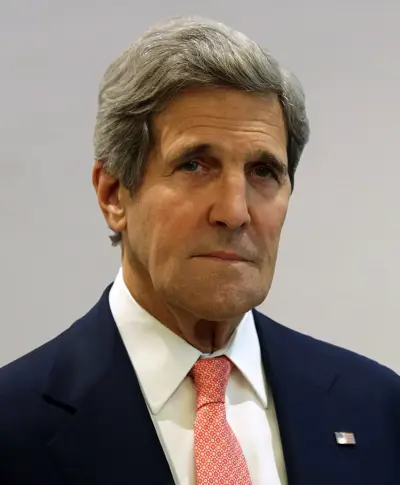
John Forbes Kerry is an American politician and diplomat serving as the United States Special Presidential Envoy for Climate. He previously served as the 68th United States Secretary of State from 2013 to 2017. An attorney and former naval officer, Kerry first drew public attention as a decorated Vietnam veteran turned anti-war activist. He went on to serve as a prosecutor and as Lieutenant Governor of Massachusetts, before serving as United States Senator from Massachusetts from 1985 to 2013. A member of the Democratic Party, he was the Democratic nominee for President of the United States in the 2004 election, which he lost to incumbent President George W. Bush. He is the last Democratic presidential candidate to date to lose the popular vote.
