Nader Shah Afshar Quotes
If there is no war in Paradise, how can there be any delights there?
He was a great military leader who conquered much of India as well as the Middle East. Warfare was such a way of life for him that most of his joys and problems came while on a military campaign. He knew little else. He is often referred to as the Muslim Napoleon for his love of and prowess in war. The graphic shows him with his army.
Nader Shah Afshar, 1698–1747, Shah of Iran & Founder of the Afsharid Dynasty, Statement when told by an Imam that there was no war or conflict in Paradise, Quoted in Mirza Mehdi Khan Astarabadi, Histoire de Nadir Chah, 1770
Sourced by: Eigen's Political and Historical Quotations


These “benefits” as well as males getting 72 virgins are constantly told to young and impressionable Muslims, some of whom take it so literally that they become suicide bombers. They actually believe that blowing themselves up feels only like the sting of a mosquito. This sales pitch for suicide bombers and other martyrs is also effective because with the poor education, high unemployment, and few political and civil rights, most young Arab males have no other way of obtaining “honor, dignity, and respect.”

One Islamic belief that has stood since the inception of the religion is that if a true believer who is defending the faith in a jihad is killed, he will immediate be transported to Paradise where he will receive the best of the other world. If a Muslim dies under normal circumstances, he is judged and may or may not attain Paradise depending on his past life. However, if he dies in jihad, all past sins are immediately erased and he is guaranteed Paradise. This quotation is exactly what is told to Muslim fighters and suicide bombers today (see {635766}, {588728} and {590762}) and it is just as effective as ever in persuading men to fight and sacrifice themselves. The Roman Catholic Pope issued a similar edict in the Crusades and fights of both religions were willing and almost anxious to die in battle. In modern times Christian leaders do not make such appeals and if they did, few would believe them.


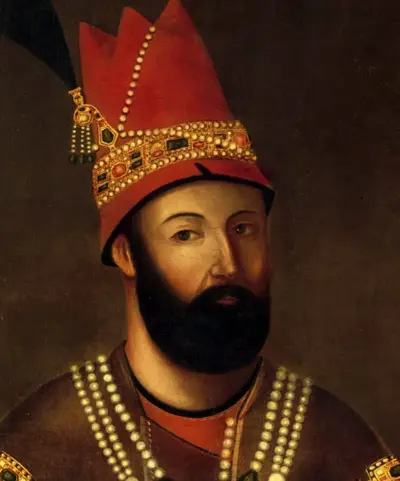
Nader Shah Afshar (Persian: نادر شاه افشار; also known as Nader Qoli Beyg نادر قلی بیگ or Tahmāsp Qoli Khan تهماسپ قلی خان) was one of the most powerful Iranian rulers in Iranian history, ruling as Shah of Iran (Persia) from 1736 to 1747 when he was assassinated during a rebellion. Because of his military genius as evidenced in his numerous campaigns throughout Middle East, Caucasus, Central and South Asia, such as the battles of Herat, Mihmandust, Murche-Khort, Kirkuk, Yeghevard, Khyber Pass, Karnal and Kars, some historians have described him as the Napoleon of Persia, Sword of Persia, or the Second Alexander. Nader belonged to the Turkoman Afshar tribe, a semi-nomadic tribe settled in Khorasan in northeastern Iran, which had supplied military power to the Safavid dynasty since the time of Shah Ismail I.
