Boethius Quotes
If there is anything good about nobility it is that it enforces the necessity of avoiding degeneracy.


To many of us the notion of liberty and aristocracy and nobility are contradictory. However, at the time, the nobility, unlike most Poles, were literate and educated and had followed the U. S. Constitution adoption. And this Constitution was created with the Nobility being one of the driving forces. See {585394}.


Although he was the first Western philosopher to emerge from the dark ages, he was one of the great advocates for freedom of speech and freedom of thought. He not only was publicly critical of many authority figures of the day, but he refused Pope Nicholas I’s orders to submit his work to Church censorship. He was supported by King Charles nonetheless, but various church councils condemned many of his writings. Ironically, one of his works that caused so much criticism was a defense of one of the views of Hincmar, the cleric who he attacked in the quotation. The radical notion was that the destiny of an individual is not totally dependent upon God, but that man has been given free will and that has some part in determining salvation.


Maria, after being ousted by her former friend, General Baldomero Espartero, comments on his lack of respect.


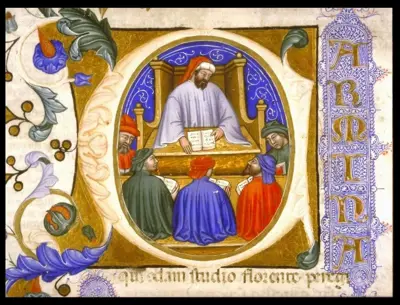
Anicius Manlius Severinus Boëthius, commonly called Boethius (/boʊˈiːθiəs/; also Boetius /-ʃəs/; c. 477 – 524 AD), was a Roman senator, consul, magister officiorum, and philosopher of the early 6th century. He was born about a year after Odoacer deposed the last Western Roman Emperor and declared himself King of Italy. Boethius entered public service under Ostrogothic King Theodoric the Great, who later imprisoned and executed him in 524 on charges of conspiracy to overthrow him. While jailed, Boethius composed his Consolation of Philosophy, a philosophical treatise on fortune, death, and other issues, which became one of the most popular and influential works of the Middle Ages. As the author of numerous handbooks and translator of Plato and Aristotle, he became the main intermediary between Classical antiquity and following centuries.
