Gamal Abdel Nasser Quotes
If the refugees return to Israel, Israel will cease to exist.
The strategy was to have Arab refugees, who had been trained to not only hate the Israelis but also in military and terrorist techniques, to return to israel and foment an insurgency. Ironically, this quotation was cited at the time as one of the few statements upon which the Israeli and Egyptian governments could agree.
Gamal Abdel Nasser, 1918-1970, Egyptian President, Interview, Neue Zuercher Zeitung (Germany), September 1, 1960
Sourced by: Eigen's Political and Historical Quotations

When the United Nations partitioned Palestine into a Jewish and a Palestinian State the Arab Countries all jointly attacked the fledgling Jewish State of Israel. Despite the Israeli’s being overwhelmingly out numbered in man and weapons, they beat back the invaders. However while many Arabs stayed on their Israeli land and some helped the Jews defend against the Arab Armies some abandoned their homes and land and went to neighboring Arab Counties. This is what they had been asked to do by the Arab governments who wanted to be able to attack communities without worrying about killing Arabs. To spur the evacuation the spread false propaganda about Israeli atrocities and frightened them into leaving. As a motivation to leave they were told that they could move into the Jewish lands and property when the Jews had been driven out. To make matters worse, some Israeli radicals repeated the lies to induce the Arabs to abandon their lands. In at least one case Arabs who stayed were subjected to violence. After the defeat of the Arabs, the Israelis had a dilemma in that they could not tell which Arabs were residents who had just been frightened and which had fought on the Arab side or helped the invaders. The result was that with few exceptions, the Arab refugees were not allowed back. Meanwhile, the Arab countries would not allow the refugees to settle and become citizens of the Arab countries (except for Jordan). The Palestinian refugees were a particularly fertile population and were cared for by the United Nations and have multiplied to many times their original size maintaining a continuous festering problem.
This quote is very important historically as it bears on the two different narratives of the creation of Israel given by the Jews and the Arabs. The Arabs claim that in the 1948 partition of Palestine, the Jew attacked the Arabs and drove them out of the areas in which they had lived for years, The Israelis claim that they urged the Arabs to stay and that all those who did, received full citizenship in the new state of Israel. The Arab leaders pressured and in some cases even forced the Arabs to leave so that the Arab armies could use artillery and other war weapons and not have to worry about hitting Arabs. They promised the Arabs who left that they could return in a few days when the Jews were defeated and pushed into the sea, and the Arabs could have the Jewish property. This report of an impartial actor, tends to support the Jewish view of the happening in so far as the behavior of the Jews was concerned. There was no pressure placed on Arabs by Jews to leave. It was actually, the reverse. There were however, two small rural areas where Jewish radicals did try and drive the Arabs out, but in general the Haifa experience was the norm.

At that time Jews in Palestine were in the minority. The issue of how to obtain the land was hotly debated amongst Jewish groups. Jabotinsky was at one extreme—colonize and take the land just as the Arabs had done to the Jews when there was a Jewish majority. His view did not however prevail. The policy was to buy the land from individual Arabs and Jewish land up to 1948 was obtained that way. In that year the UN partitioned Palestine and 11 Arab armies attacked the new state of Israel and asked the Arab civilians to leave the area so that the Army could cleanse it of Jews. Many did not, and they or their descendants are still on their land or have sold it. The Arabs who left, were suspected of being possible collaborators or terrorists, and they have never been paid for their land or allowed to return. Compensation is still in dispute. At the same time Jews driven out of Arab countries by law and the military have never been compensated or given any right of return either.


This statement hardened the Israeli population away from anything that would bring Hamas more power. The PLO leader had, for ALL the Palestinian people, recognized the right of Israel to exist {633062}. Now Hamas was not only reneging on the Arafat declaration, but also would not even use the term “Israel” and instead calls the nation which in less time than the Palestinians have had, has developed a modern, industrial, democratic state far in advance of the Palestinians or any of the Arab nations for that matter. Yet it is relegated to a “project” with the great hope of having it come to an end—the destruction of Israel. The Israelis observe that this is a de facto declaration of war, and hence treat Gaza and Hamas as an enemy force to be reckoned with. See {635338} for another alarming reneging of the recognition of Israel.


When the United Nations partitioned Palestine into a Jewish and a Palestinian State the Arab Countries all jointly militarily attacked the fledgling Jewish State of Israel. Despite the Israeli’s being overwhelmingly outnumbered they beat back the invaders. However while many Arabs stayed on their Israeli land and some helped the Jews defend against the Arab Armies, some others abandoned their homes and land and went to neighboring Arab Counties. This is what they had been asked to do by the Arab governments who wanted to be able to militarily attack communities without worrying about killing Arabs. To spur the evacuation the Arab leadership spread false propaganda about Israeli atrocities and frightened them into leaving. As a motivation to leave they were told that they could move into the Jewish lands and property when the Jews had been driven out. To make matters worse, some Israeli radicals repeated the lies to induce the Arabs to abandon their lands. In at least one case, Arabs who stayed were subjected to Jewish violence. Each side has since railed about what the other side did at that point in time and each fails to mention how they contributed to the refugee problem.


The PLO and most of the Arab nations, took the position that the United Nations original partition of Palestine into a Jewish and a Palestinian nations -- UN General Assembly Resolution 181 – was “illegal”. That view has served as the basis for the Arab Israeli problems since. The basis of the illegality they claimed was the right of the Palestinians to self determination. However, it is a right which they deny to the Jews living in Palestine who also had a right to self determination. The UN solution was to partition the land into two nations so that the each had the right of self determination. However, the Arab leadership wanted only Arabs to have the right of self determination.

This quotation is the basis of the Arab argument that the United Nations decided that the Palestinian refugees who left Israel upon its creation at the urging of some Arab leaders. Other’s opposing this point of view observe that only the Security Council’s resolutions are binding and the General Assembly resolutions have no weight in International Law. Further that the Arab Refugees do not want to “live at peace” as is required in the resolution. Numerous surveys demonstrate the desire of most of the Palestinian refugees to support efforts to expel the Jewish Israelis from Israel. The other barrier is that there are tens of thousands of Jews who were forcibly ejected from Arab countries for whom no country is offering a right of return. The irony of Resolution 194 is that it was opposed by every Arab country at the time.


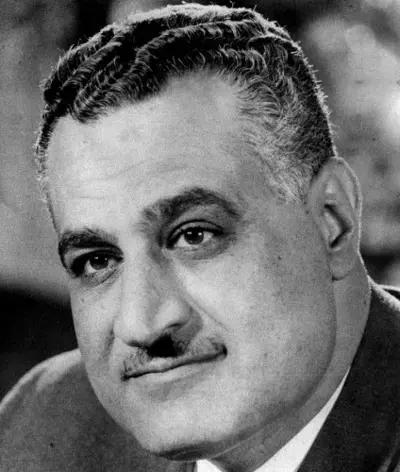
Gamal Abdel Nasser Hussein was an Egyptian politician who served as the second President of Egypt from 1954 until his death in 1970. Nasser led the 1952 overthrow of the monarchy and introduced far-reaching land reforms the following year. Following a 1954 attempt on his life by a Muslim Brotherhood member, he cracked down on the organization, put President Mohamed Naguib under house arrest and assumed executive office. He was formally elected president in June 1956.
