Jean-Baptiste Say Quotes
If the community wish to have the benefit of more knowledge and intelligence in the labouring classes, it must dispense it at the public charge.
Jean-Baptiste Say, 1767-1832, French economist and journalist, A Treatise On Political Economy: or the Production, Distribution, and Consumption of Wealth
Sourced by: Eigen's Political and Historical Quotations


JOAM was a nativist workingmen's organization founded in 1853 to resist the competition for jobs from immigration. See {584649} for an example. At its peak it had over 200,000 members.


Note that he included all youth who were not slaves, not just the rich or the nobility. This was one of the earliest beginnings of public education." ""the Great


Alabama. Mississippi and the other states of the South have from the inception of the nation had a much poorer educational system (often no system at all). Even when Jim Crow discrimination was rampant in the South, the white schools were very poor and the Black schools terrible. At the end of the 20th century after integration, there were more serious attempts to improve education in the South and progress is being made to reach parity with the rest of the country. However, there is still in many Southern school boards hostility to science and other aspects of modern education and Southern states tend to censor school texts and library books this weakening the educational system. But progress is being made.
_0_thumbnail_47x47.jpg "Statue of Robert Hall in Leicester.")
This was the argument of most of the upper class conservatives. In almost every society, education for the masses has been fought by the most conservative element of the society before it is finally overwhelmed by the rest of society. Ironically, in just about every nation with public education, there was long term dissatisfaction with the status quo. The conservatives were not wrong in their prediction; they were wrong in that it was good and not bad. The aspiration of the whole society was for improvement and progress after education of most citizens.
At the time of this quotation, the nation had gone through more than 3 decades of enormous increase in prosperity for the wealthy, and modest gains for the highly skilled, technically trained workers. However, correcting for inflation, average salaries did not increase at all. The middle class was particularly hard hit. Only 20 percent of the population benefitted from the growth at all; however, the 1 percent had rarely prospered more. Kenworthy’s principle did not apply for this period of American history.


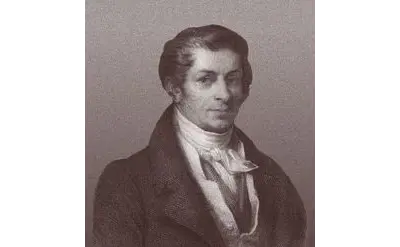
Jean-Baptiste Say was a liberal French economist and businessman who argued in favor of competition, free trade and lifting restraints on business. He is best known for Say's law—also known as the law of markets—which he popularized. Scholars disagree on the surprisingly subtle question of whether it was Say who first stated what is now called Say's law. Moreover, he was one of the first economists to study entrepreneurship and conceptualized entrepreneurs as organizers and leaders of the economy.
