Gregory Stock Quotes
If out of concern over cloning, the U.S. Congress succeeds in criminalizing embryonic stem-cell research that might bring treatments for Alzheimer's disease or diabetes - and Dr. Fukuyama lent his name to a petition that supported such laws - there would be real victims: present and future sufferers of those diseases.
Stock, Gregory. Redesigning Humans: Our Inevitable Genetic Future. Houghton Mifflin, 2002.


When couples use in vitro fertilization to have children, they usually produce several fertilized embryos one of which is implanted into the womb of the mother. The other embryos can produce stem cells which are cells that can grow into any other kind of cell—brain cells, bone, cells, kidney cells, stc. Therefore they have the most promise for medical research. However, some people regard the embryos as human beings at an early stage of development and see the embryos as life. For them the notion of using that “life” for medical research where a human being will not be produced but instead a medicine or replacement cells for a sick person crosses a moral line of what is proper for a life form. Others observe that the embryos are kept alive in freezers and will be thrown away if not needed so why not use them to help mankind. At the other extreme some are opposed to allowing in vitro fertilization to begin with, but there have been over a million people born with this technique to couples who otherwise would not have been able to have children.


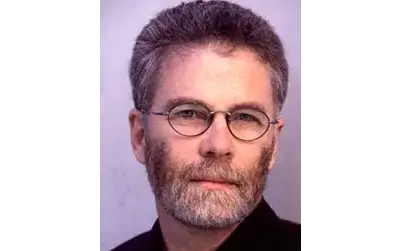
Gregory Stock is a biophysicist, best-selling author, biotech entrepreneur, and the former director of the Program on Medicine, Technology and Society at UCLA’s School of Medicine. His interests lie in the scientific and evolutionary as well as ethical, social and political implications of today's revolutions in the life sciences and in information technology and computers.
