Thomas Carlyle Quotes
If our Chancellor of the Exchequer had a Fortunatus' purse, and miraculous sacks of Indian meal that would stand scooping from forever,--I say, even on these terms Pauperism could not be endured; and it would vitally concern all British Citizens to abate Pauperism, and never rest till they had ended it again. Pauperism is the general leakage through every joint of the ship that it is rotten. Were all men doing their duty, or even seriously trying to do it, there would be no Pauper. Were the pretended Captains of the world at all in the habit of commanding; were the pretended Teachers of the world at all in the habit of teaching,--of admonishing said Captains among others, and with sacred zeal apprising them to what place such neglect was leading,--how could Pauperism exist?
Carlyle was no democrat but saw poverty as a failure of the upper classes and the leadership—intellectual, economic, and political—of the nation. Poverty (often called “pauperism” at the time) should be eliminated, he believed, and it was the responsibility of the leadership to eliminate it. It was an early call for a “War on Poverty.”
Thomas Carlyle, 1795-1881, Scottish essayist and historian, Member of Parliament, The New Downing Street, April 15, 1850
Sourced by: Eigen's Political and Historical Quotations

He was very conservative in almost all things, but here and with the equality of women (see {638806}) he was far ahead of his time.


This quotation is one of the great metaphorical statements of social and political oratory. Then, and even today, most people who discuss the wealthy and their callousness towards the poor are accused of class warfare. Here Debs profoundly attacked the rich and their inaction in society without ever mentioning the wealthy in any way. There was no way of labeling this as an attack on anyone or class warfare.


This was the first written constitution in the Americas.


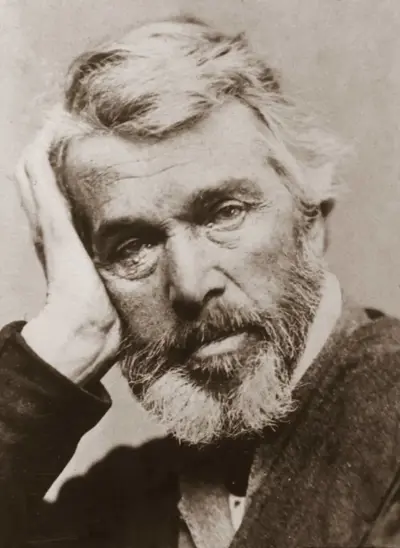
Thomas Carlyle was a Scottish historian, satirical writer, essayist, translator, philosopher, mathematician, and teacher. In his book On Heroes, Hero-Worship, and The Heroic in History (1841), he argued that the actions of the "Great Man" play a key role in history, claiming that "the history of the world is but the biography of great men". Other major works include The French Revolution: A History, 3 vols (1837) and The History of Friedrich II of Prussia, Called Frederick the Great, 6 vols (1858–65).
