Douglas Brinkley Quotes
If D-Day - the greatest amphibious operation ever undertaken - failed, there would be no going back to the drawing board for the Allies. Regrouping and attempting another massive invasion of German-occupied France even a few months later in 1944 wasn't an option.
Brinkley, Douglas. "The True Meaning of D-Day." CNN, Turner Broadcasting System, 5 June 2014.


The allies had differences in desirable strategy alternatives. Russia was facing the German Army on its Eastern front and causing huge German casualties but were paying for them in large loss of Russian life—civilian and military (The Russians suffered 22 million deaths as a result of WWII.) Stalin wanted to open a second front in France which would force the Germans to move some divisions from the Russian front, thereby relieving some of the pressure.


The general was replacing George S. Patton as commander of the Third Army. Patton had opposed the deNazification policy of the allies and caused a great deal of public relations difficulty for the army command and the administration, as reporters would frequently print his views. Truscott was one of Patton’s loyal assistants. The minute he took over, the press wanted to find out if his views were the same as his former boss regarding the Nazis. They were quite different. Reporters had no story.

Note that he assumes that not only will there be another World War, but he assumes that we will be on opposite sides.

The military security people were so used to ferreting out communists in the 1930s that they had a hard time adjusting to the fact that the security risks or people who might have German connections or backgrounds. Many immigrant scientists were recruited for work on the Manhattan project to build the atomic bomb and they only did security clearances. The military security people kept checking on any communist background they might have had as opposed to possible connections with fascist organizations. By the end of the war they had adjusted but then had to go back to looking for communists as the Cold War evolved.


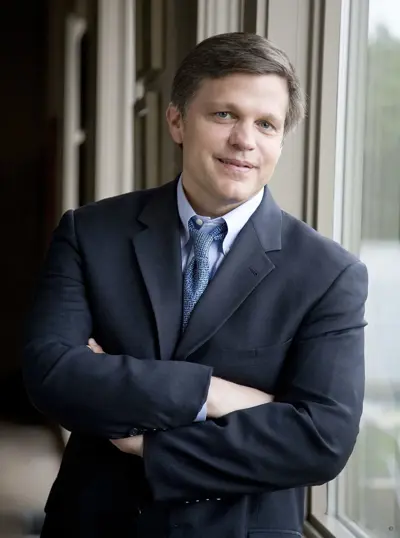
Douglas Brinkley is an American author, Katherine Tsanoff Brown Chair in Humanities and professor of history at Rice University. Brinkley is the history commentator for CNN, Presidential Historian for the New York Historical Society, and a contributing editor to the magazine Vanity Fair. He is a public spokesperson on conservation issues. He joined the faculty of Rice University as a professor of history in 2007.
