Greg Grandin Quotes
If all Henry Kissinger contributed to the Middle East were a regional arms race, petrodollar addiction, Iranian radicalization, and the Tehran-Riyadh conflict, it would be bad enough. His legacy, however, is far worse than that: He has to answer for his role in the rise of political Islam.
Grandin, Greg. Kissinger's Shadow: The Long Reach of America's Most Controversial Statesman. Metropolitan Books, 2015.


Ironically, at the time she wrote this column, Mrs. Roosevelt was being accused of being a communist by some Southerners who associated her strong views against racism and segregation. Some in the North thought she was a communist because of her active role in the New Deal, Yet here she was, willing to use military force to prevent Soviet expansion.


The Israeli’s had earlier been urged by America to give control of the Suez Canal back to Egypt. The Israeli’s held control of the Canal so that the Egyptians could not cut off ships from reaching Israel. The US had in exchange guaranteed that Israel would have free and unfettered access and to the sea. Egyptian dictator Gamal Abdul Nasser had just closed the Red Sea straights to the Israeli’s and the US was working on rolling that action back. However, some of the American oil companies privately were urging President Johnson to reneg on our commitments to our ally in order to ensure the profits of the oil companies. Johnson did not abandon Israel. ARAMCO made more money than ever. America was not finished in the Middle East.

Nasser was indeed planning an attack. Israeli intelligence had discovered it, and the Israeli’s informed President Lyndon Johnson who in turn called Kosygin. Nasser and the Arabs had miscalculated again and ended up being not only defeated in the war they wanted but totally embarrassed by the incredibly poor performance of the Arab armies who greatly outnumbered the Israelis but had no stomach for a fight.

The quotation is notable as it illustrates the great difficulty that modern democracies have with extreme Islamic fundamentalists. Their very perception and world view is so different that often we think of the extremists as insane and they often feel the same way about us.

Actually, this is a relatively new phenomenon. Before this, it was the Western Colonialists who were to blame. Before that it was the Ottoman Turks who occupied their land, and before that it was the Christian Crusaders. Since the Arab countries have started their decline from one of the most advanced people and cultures of the world to one of the least, they have always found some external source to blame. Many scholars observe that that process of blaming others and not looking inward and avoiding the reforms that other religions and cultures went through is among the biggest reasons for their decline.
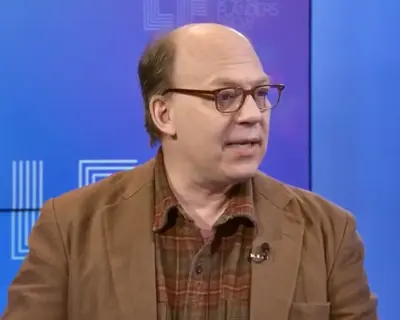
Greg Grandin (born 1962) is a professor of history at Yale University. He previously taught at New York University. He is author of a number of books, including Fordlândia: The Rise and Fall of Henry Ford's Forgotten Jungle City, which was a finalist for the Pulitzer Prize for History, as well as for the National Book Award and a National Book Critics Circle Award. A more recent book, entitled, Who Is Rigoberta Menchú?, focuses on the treatment of the Guatemalan Nobel Peace Prize winner. His 2014 book, The Empire of Necessity: Slavery, Freedom, and Deception in the New World, is a study of the factual basis for the novella Benito Cereno by Herman Melville.
