Joseph Stalin Quotes
If, against all expectation, Germany finds itself in a difficult situation then she can be sure that the Soviet people will come to Germany's aid and will not allow Germany to be strangled. The Soviet Union wants to see a strong Germany and we will not allow Germany to be thrown to the ground
In one of the most cynical treaties in history, Communist Russia under Stalin entered into a mutual defense treaty with Fascist Nazi Germany under Hitler. Russia and Germany had been bitter enemies, and philosophically Communism and Fascism had been at opposite poles. But both countries were led by ruthless dictators who at this moment in history became useful to each other. One result for example, is that Germany and Russia divided Poland which lost its independence and its integrity. The pact did not last very long, and soon the two nations were again bitter enemies and the battles between them accounted for the majority of both nations’ WWII casualties where the Russians had 22 million of their citizens killed by their former “allies”.
Joseph Stalin, 1879-1953, Russian Premier, Statement in September 1939, Quoted in "Stalin's pact with Hitler", PBS WWII Behind Closed Doors
Sourced by: Eigen's Political and Historical Quotations

Vladimir Lenin

At the time, he was president of a de facto Puppet state of the soviet Union. However, many Afghans paid him no heed, and attacked Russians and their assets in Afghanistan with the object of driving the Russians out which they finally did.


The two were cousins. Wilhelm was a very dominant personality and his cousin quite weak. This quotation shows the egomaniacal view of the German Kaiser. The letters were secret but after the execution of the Czar, the Russians released the letters to show the dominant and warlike history of Germany under the Kaiser who was furious that the Russians had made such personal and secret letters public.


They were both children of Queen Victoria of England.


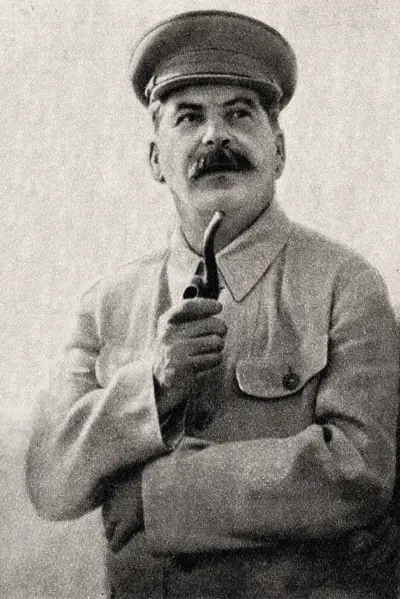
Joseph Vissarionovich Stalin was a Georgian revolutionary and the ruler of the Soviet Union from 1927 until 1953. He served as both General Secretary of the Communist Party of the Soviet Union (1922–1952) and Chairman of the Council of Ministers of the Soviet Union (1941–1953). Despite initially governing the country as part of a collective leadership, he ultimately consolidated power to become the Soviet Union's de facto dictator by the 1930s. A communist ideologically committed to the Leninist interpretation of Marxism, Stalin formalized these ideas as Marxism–Leninism while his own policies are known as Stalinism.
