Daniel Yergin Quotes
If a war started, the oil price probably would go up, as you said, maybe $5, $6 a barrel until you saw other oil from the extra supplies that are available elsewhere coming into the world, into the market.
Yergin, Daniel. Interview with Wolf Blitzer. CNN Late Edition with Wolf Blitzer, CNN, 16 Feb. 2003.


Almost all economists believe that Harding had it totally wrong. WWII for example was one of the greatest increases in productivity in world history. The Civil War and the two world wars both were accompanied by many increases in industrial productivity. The losing side is usually totally devastated by war, and sometimes the winners are impoverished as with England and Russia in WWII. However, the North thrived in the Civil War and America did in WWII. Many economists say that war often impairs the economy of even a winning country in that the war expenditures generally are made at the expense of the civilian economy—infrastructure, public transportation, education, and in the decades following the war the lack of domestic investment in the war years reduces medium and long term growth.


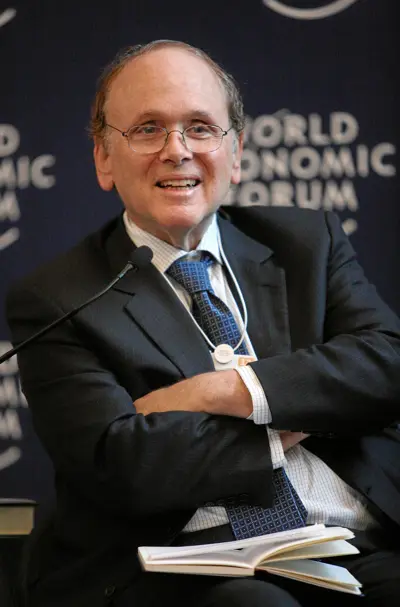
Daniel Howard Yergin is an American author, speaker, energy expert, and economic historian. Yergin is vice chairman of IHS Markit, a research and information company which absorbed his own energy research consultancy Cambridge Energy Research Associates in 2004. He has authored or co-authored several books on energy and world economics, including the Pulitzer Prize–winning The Prize: The Epic Quest for Oil, Money, and Power, (1991) The Quest: Energy, Security, and the Remaking of the Modern World (2011), and The New Map: Energy, Climate, and the Clash of Nations (2020). Yergin's articles and op-eds on energy, history, and the economy have been published in publications such as The Wall Street Journal, The New York Times, The Washington Post, and the Financial Times. All of Yergin's books have been drafted in long-hand. Currently a director on entities such as the Council on Foreign Relations and the United States Energy Association, he is also a trustee of the Brookings Institution and a long-term advisor to several U.S. administrations, as well as chairman of the annual CERAWeek energy conference.
