Oliver Joseph Lodge Quotes
..if a special geometry has to be invented in order to account for a falling apple, even Newton might be appalled at the complications which would ensue when really difficult problems are tackled.
Lodge, Oliver. "Relativity." Nature, vol. 106, Macmillan and Co., 1921, p. 799.


For many scientists, this is the goal of each area of inquiry. For others, the science is crude and really not understood unless the mathematical model exists and can be verified experimentally. For Thompson, this was the difference between understanding and not.


This quotation illustrates and important aspect of science. Specifically, that theory, something ephemeral and impractical to the layman, has immense practical power in developing great scientific and technological breakthroughs. The result of this breakthrough was large lenses that could make lights more powerful and make lighthouses much more safe. Even the atomic bomb was really developed from theory and then engineered for practical use.

Historically, in the first half of the 20th century, nuclear scientists discovered that probability governed and was necessary for understanding quantum mechanics—the laws of physics governing tiny objects like atoms, electrons, protons and even quarks. To many, this seemed a contradiction in that it was hard to conceive particles following laws and yet behaving randomly at the same time. However, it did not take long before all the scientists adjusted their thinking and learned to live and work with that was then a type of contradiction but is no longer thought so as men and women have learned to think in a new way. This quotation illustrates that the greatest scientists in the world, in a very short period of time, had to change their entire mode of thinking. There were no real holdouts or “conservatives” who wanted to maintain the older values. This would never happen in politics, where change is not accepted very quickly.


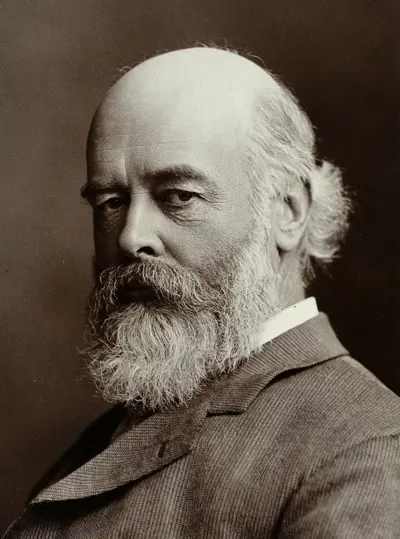
Sir Oliver Joseph Lodge, FRS was a British physicist and writer involved in the development of, and holder of key patents for, radio. He identified electromagnetic radiation independent of Hertz's proof and at his 1894 Royal Institution lectures ("The Work of Hertz and Some of His Successors"), Lodge demonstrated an early radio wave detector he named the "coherer". In 1898 he was awarded the "syntonic" (or tuning) patent by the United States Patent Office. Lodge was Principal of the University of Birmingham from 1900 to 1920.
