Henry David Thoreau Quotes
I would not have every man nor every part of a man cultivated, any more than I would have every acre of earth cultivated: part will be tillage, but the greater part will be meadow and forest, not only serving an immediate use, but preparing a mould against a distant future, by the annual decay of the vegetation which it supports.
Thoreau, Henry David. "Walking." The Atlantic Monthly, vol. 9, no. 56, Ticknor and Fields, June 1862.

As hard as it is for us to imagine today, while her husband was President of the United States, the First Lady wrote a nationally syndicated newspaper column every single day with politics frequently the subject. While she usually agreed with the President, there were occasions where they seemed to not see things exactly the same. She tended to be more liberal than he. However, there were those who believed that when she criticized politicians, it was with FDR’s knowledge and blessing and she sometimes did his “dirty work.” Eleanor Roosevelt was one of the most influential people in the country—certainly more-so than any First Lady before and since.


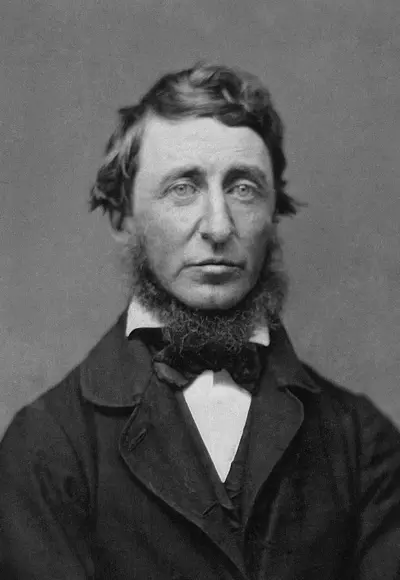
Henry David Thoreau was an American naturalist, essayist, poet, and philosopher. A leading transcendentalist, he is best known for his book Walden, a reflection upon simple living in natural surroundings, and his essay "Civil Disobedience" (originally published as "Resistance to Civil Government"), an argument for disobedience to an unjust state.
