Edward Snowden Quotes
I would argue that security and liberty, security and privacy are not actually opposing. The only place those can be oppositional is in the realm of rhetoric but not fact.
Snowden, Edward. Interview by Katrina vanden Heuvel and Stephen F. Cohen. The Nation, 28 Oct. 2014.


In England there was an eye on American McCarthyism and its excesses.


The call for embedding the balance in the law is in contrast to the past where the balance was left to the discretion of the intelligence agency leadership but technological limitations curtailed their ability to unbalance things too much.


Israel, like the UK, does not have a constitution or bill of rights per se, and laws passed by the Knesset serve the role of enumerating rights.


The Grammar Curmudgeon

After 4 years as president he became less idealistic. See {633099}.

He was the Chairman of the Senate Judiciary Committee. The intelligence and law enforcement advocates of reducing privacy rights so that law enforcement can prevent acts of terrorism frame the question as a tradeoff between civil right and safety. However, as Leahy and many others point out, we would not be much safer if we gave up all our ivil rights. Further, hundreds of thousands of American have given their lives so that we would have those civil rights. Without them what are we protecting.

Snowden, was a contract worker for Booz Allan assigned to the National Security Agency (NSA). He felt that some of the NSA activities were illegal and unethical and tried to complain to NSA officials who rebuffed him. Despite the fact that he had signed an agreement not to do so, he copied many critical, classified documents that exposed much of the NSA activities that the NSA officials had denied existed—including lying under oath to the Senate. He then made many of them public, violating his oath, breaking the law, and opening up an entire area of government spying which most Americans knew nothing about and about which senior government officials had lied under oath to Congress. They of course wanted to prosecute Snowden who had told the truth, while they had lied. For many Americans, this became a moral and ethical conundrum.

While this sounds good, in Taiwan it is not clear that the Premier has any authority over the intelligence agencies that is meaningful. Even in the United States Major intelligence leaders have lied to Presidents and the Congress about their clearly illegal activities, and many sceptics suggest that the Premier would have no way of knowing what his intelligence agencies are actually doing.
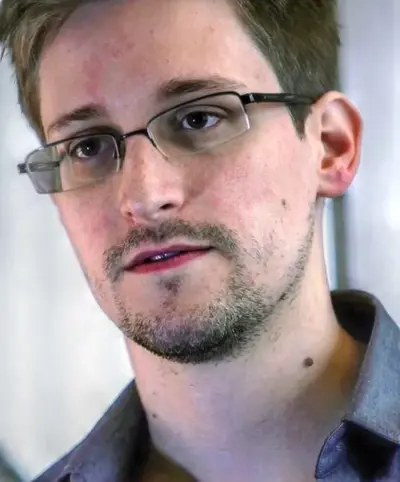
Edward Joseph Snowden is a former computer intelligence consultant who copied and leaked highly classified information from the National Security Agency (NSA) in 2013 when he was a Central Intelligence Agency (CIA) employee and subcontractor. His disclosures revealed numerous global surveillance programs, many run by the NSA and the Five Eyes Intelligence Alliance with the cooperation of telecommunication companies and European governments, and prompted a cultural discussion about national security and individual privacy.
