Hippocrates Quotes
I will not give to a woman a pessary to cause abortion.
Hippocrates. "The Oath." Hippocrates, vol. 1, translated by W. H. S. Jones, Harvard University Press, 1923, p. 299.


Actually it was as late as 1963, that the Supreme Court ruled that States could not make the sale of birth control devices or drugs illegal. In many jurisdictions in the United States, women who do not have insurance and cannot afford birth control, there are state and private organizations, like Planned Parenthood, who will provide them. However, some conservative forces are trying to put Planned Parenthood out of business. A few doctors and nurses who perform abortions and proscribe birth control have been murdered by the fanatics. Almost of the so called “pro life” forces not only oppose abortion but contraception and family planning as well. They tactically tend to concentrate first on abortion, but most also believe that the life and death issues are for them the same, as opposed to most American feelings. The literal prohibiting Biblical injunctions are even more specific about birth control than abortion.


The Prime Minister’s wife, a Roman Catholic, like most Roman Catholics in Europe and America practice contraception despite the fact that the Catholic Church still maintains that artificial means of birth control is a sin. Rarely are such personal matters discussed with the media in Great Britain which respects the personal privacy of public figures more so than the United States. However, Mrs. Blair and her husband have been particularly open throughout their public career.


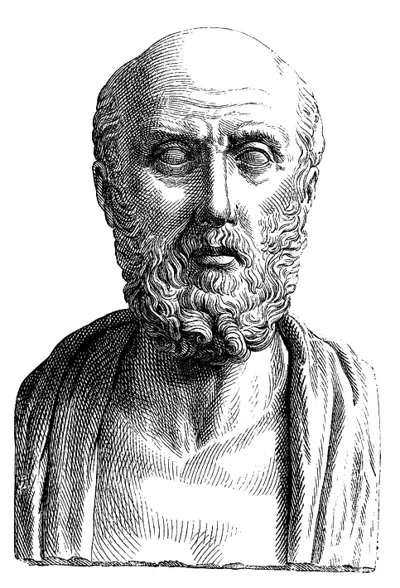
Hippocrates of Kos (/hɪˈpɒkrətiːz/; Greek: Ἱπποκράτης ὁ Κῷος, translit. Hippokrátēs ho Kṓos; c. 460 – c. 370 BC), also known as Hippocrates II, was a Greek physician of the Age of Pericles (Classical Greece), who is considered one of the most outstanding figures in the history of medicine. He is traditionally referred to as the "Father of Medicine" in recognition of his lasting contributions to the field, such as the use of prognosis and clinical observation, the systematic categorization of diseases, or the formulation of humoural theory. The Hippocratic school of medicine revolutionized ancient Greek medicine, establishing it as a discipline distinct from other fields with which it had traditionally been associated (theurgy and philosophy), thus establishing medicine as a profession.
