Roscoe Bartlett Quotes
I will fight for budget honesty and eliminating the deficit to reduce the transfer of debt to younger generations.
Bartlett, Roscoe. "Issues." Roscoe Bartlett for Congress, 2012.


This is a particularly interesting historical quotation. It shows that when FDR was first elected, he had a classic view of deficit spending. However, above all, Roosevelt was a pragmatist and not an ideologue. Faced with the Great Depression that was not getting much better, Roosevelt turned around, changed his mind and policy about deficits and embarked on the “pump priming” approach of injecting substantial Federal spending into the economy and accepting the deficits in order to improve the situation which had been stagnant. FDR’s new policy staved off total disaster, but few remember that his great success was a total reversal of his earlier views.


This is the kind of advice that Presidents have given the Congress for years. What makes this quotation noteworthy is the person who made the statement, President George W. Bush. It was made in the 7th year of his Presidency which had in those 7 years, at his urging, gone from a balanced budget and a national surplus projected, to the largest deficit of any nation in history and a projected deficit that even dwarfed that. So the irony of the quotation was that the politician who produced the largest economic burden on future generations was lecturing other politicians on the evils of doing exactly what he himself had been doing. Bush, if nothing else, was one of the most audacious politicians in this respect, though his most severe detractors claim that he did not have the intellectual perspective to even understand the hypocrisy of his quotation,


He told the government that the bank was 7 billion Euros short, and after much soul searching, the Irish government agreed to assume the debts of the bank lest all the depositors would only get a small fraction of their deposits back. However, the real deficit that the Irish government had to cover was many times the 7 billion. This led to the complete collapse of the Irish economy. Bowe and the other bank officials maintained that they thought the deficit was only 7 billion when they told that to the government. Four years later, confidential audio tapes of some telephone conversations between Bowe and other bank officials turned up and it was clear that Bowe had picked the 7 billion number out of thin air. It was a number that Bowe thought would be large enough that the Government would have to bail the bank out, but not so large that the government officials might conclude that the bailout cost was too high and it would be better to let the bank fail. By 2013 neither Bowe or any of the other Anglo Irish Bank officials had gone to jail or even been indicted. But millions of Irish citizens had their personal and business economies destroyed. See {635438} for a reaction to the exposure of the meeting.

Almost every major corporation that is growing must borrow money to finance the growth. There is a great temptation to do this continuously, as if all works out the borrowed money is paid back and the nation has grown. However, not every investment succeeds, and when they do, few nations will take the growth and save it for a future date when a national investment does not work out as well as hoped. Gradually national debt as a proportion of the economy gets larger and larger and it makes mew investments more and more difficult to succeed because of the higher rates of interest that must be paid. Every modern country must find a balance. Those that do not can have a financial disaster such as Greece in the early part of the 21st century.

At the time, many conservatives were threatening not to increase the debt ceiling unless they could get their way on the budget negotiations which would come up later. The Congress had earlier actually committed to spend the amounts when they voted the appropriations that enabled the spending and increasing the debt. Most countries do not have this second stage in that there is nothing the Congress can possibly do to change get back the money that they already voted to be spent, and the process of raising the debt ceiling must be done else the “full faith and credit” of the United States.


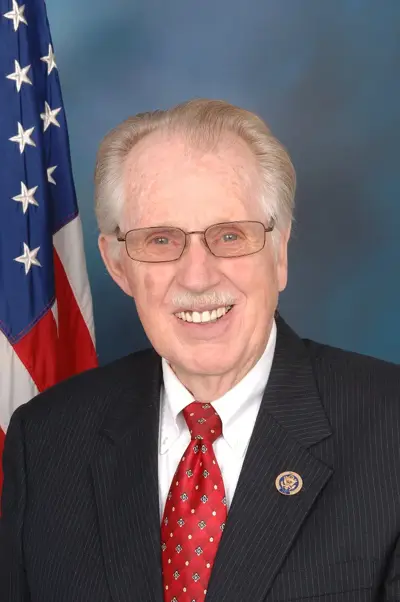
Roscoe Gardner Bartlett is an American politician who was U.S. Representative for Maryland's 6th congressional district, serving from 1993 to 2013. He is a member of the Republican Party and was a member of the Tea Party Caucus. At the end of his tenure in Congress, Bartlett was the second-oldest serving member of the House of Representatives, behind fellow Republican Ralph Hall of Texas.
