Samuel Barber Quotes
I was supposed to be a doctor. I was supposed to go to Princeton. And everything I was supposed to do I didn't.
Kozinn, Allan. "Samuel Barber: The Last Interview and the Legacy." High Fidelity, vol. 31, no. 6, June 1981, pp. 43-46.

MacArthur was not difficult and unaccepting of higher authority just in the Korean War. He was dissatisfied with American strategy in WWII. He was very unhappy with the decision that placed defeat of Germany and Hitler as a higher priority than his defeat of Japan. He perceived himself as the most qualified and senior American military man and resented the fact that others were making the big strategic decisions and not acceding to his views sufficiently. Also, Dwight Eisenhower had been appointed as Supreme Commander of the European Front which had the highest priority. MacArthur, a man with a huge ego, saw Eisenhower, who had served under MacArthur earlier, as a competent “junior” officer. See {605728} for insight into has view of Eisenhower. While it was certainly true that if given more gasoline, men and armaments, McArthur could have done more and faster, it would have to be taken from the effort to subjugate Germany which would have had to slow down.


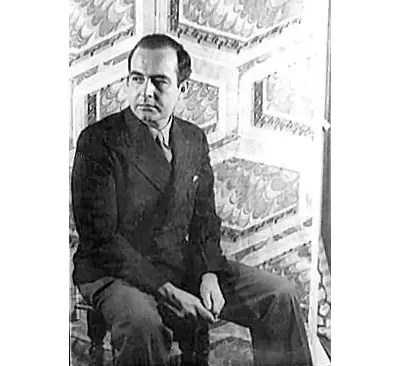
Samuel Osmond Barber II was an American composer, pianist, conductor, baritone, and music educator. One of the most celebrated composers of the 20th century; music critic Donal Henahan stated, "Probably no other American composer has ever enjoyed such early, such persistent and such long-lasting acclaim." Principally influenced by nine years of composition studies with Rosario Scalero at the Curtis Institute and more than twenty-five years of study with his uncle, the composer Sidney Homer, Barber's music usually eschewed the experimental trends of musical modernism in favor of utilizing traditional 19th-century harmonic language and formal structure that embraced lyricism and emotional expression. However, elements of modernism were adopted by Barber after 1940 in a limited number of his compositions, such as an increased use of dissonance and chromaticism in the Cello Concerto (1945) and Medea's Dance of Vengeance (1955), and the use of tonal ambiguity and a narrow use of serialism in his Piano Sonata (1949), Prayers of Kierkegaard (1954), and Nocturne (1959).
