Gene Weingarten Quotes
I was possessing heroin in fairly large quantities in New York City during the years of the draconian Rockefeller Drug Laws. Had I been busted, I would have faced mandatory life in prison. I don't think many white kids walked, either. I knew one who got 15 years for pot.
Weingarten, Gene. "Chatological Humor." The Washington Post.


Two decades earlier leading Black politicians, observing the differential deleterious effects of drug use on Blacks called for a massive Federal effort to diminish substance abuse. The War on Drugs responded and reduced the drug use in America somewhat. However, the unintended consequences—especially for Blacks—caused many Black politicians to call for an end or serious curtailing to the War on Drugs. The differential effect on Black males was dramatic. White drug dealing tended to occur in private offices and homes where black dealing takes place to a greater extent on the streets where the lower level dealers are much more likely to be caught. The differential penal;ties for possession or selling of powdered cocaine (preferred by whites) and crack cocaine (preferred by Blacks) caused many more Blacks to be jailed. With less access to the better attornies, the Bplacks tend to get longer sentences, even for the same crime. In addition, the drug of choice for most whites is alcohol which was made legal while the drugs of choice for Blacks are illegal. In many Black urban neighborhoods like Newark, the majority of young Black men arwere in jail for ddrug law violations. See {624056} for a concurring opinion.

The interesting thing about this quotation is that he himself was a drug addict who illegally used drugs. However, when he finally got caught, the judge didn’t follow is “law and order” ranting. He got off without serving any jail time.


La Guardia had seen some Federal officials claim that marijuana was a very dangerous drug leading to insanity, violence and murder if used. See {624434} and {590692} . However, none of the “dangers” had been verified by science and medicine/ La Guardia was the first public official who asked scientists to study the substance and let people know the real danger if any. The report was a major contracdiction to the federal propaganda that had been issued, and even continued to be after this study by the prestigious New York Academy of Medicine. It has been known for a long time that marijuana was relatively harmless when compared with other drugs such as heroin, cocaine, alcohol and tobacco. At the time the government officials had lied to the public grossly exaggerating the negative effects of marijuana. And scientific research was prohibited in most cases until the 21st century. And the evidence is now available that while marijuana does not have the very dangerous effect that was claimed, it is not benign either. Marijuana has an effect on the brain—especially of youth who are still developing—that is not totally understood. And there is a definite negative relationship between the extent of marihuana smoking student grades. Also we know now that marijuana impedes social development as well as intellectual. The causality is not clearly established however. It is possible that the poorer students and those less socially skilled have little success and use marijuana. With the exception of many adults who claim that marihuana helps them tolerate cancer drugs and other pain, there is no other benefit that has been found. Youngsters can think they are “cool” but that is about it on the plus side. On the negative side, marijuana is not the most dangerous drug one can take, but it is certainly not harmless.


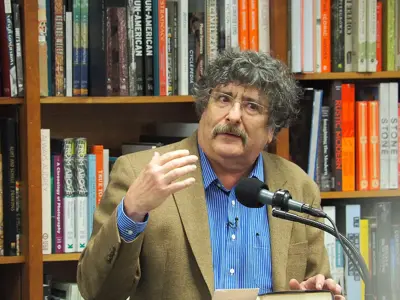
Gene Norman Weingarten is an American syndicated humor columnist at The Washington Post. He is a two-time winner of the Pulitzer Prize for Feature Writing. Weingarten is known for both his serious and humorous work. Weingarten's column, "Below the Beltway," is published weekly in The Washington Post magazine and syndicated nationally by The Washington Post Writers Group, which also syndicates Barney & Clyde, a comic strip he co-authors with his son, Dan Weingarten, with illustrations by David Clark.
