Olivia de Havilland Quotes
I was naturalized right before Pearl Harbor. Nine days later, I would have been classified as an enemy alien. I might have been sent to a camp.
Amador, Victoria. Olivia de Havilland: Lady Triumphant. University Press of Kentucky, 2019.


I was born here. My children were born here. What the hell do I have to do to be called an American?
A Boston newspaper referred to Kennedy as "an Irishman." Until the latter part of the 20th century, there was an ugly, anti-Irish dimension to the national scene that was every bit as ugly as the other ethnic hatreds like anti-Semitism. The Irish like the early Jews had six strikes against them. They were foreigners. They were not Christian Protestants, they were poor, they did not know the American culture, they spoke English with a distinct accent, and they were the lowest of the lower classes. Even rich Irish like Kennedy were looked down upon and when his son ran for President he had to overcome a still significant block of anti-Irish Americans.


The highest court in New York. At the time only U. S. citizens could own land. Since the majority of the population were farmers, this was a critical limitation with a major inducement to citizenship. Today, that motivation is no more, and critics of our immigration policy are concerned that there is no longer the desire and commitment to be American but just to make money from the American economy with a cultural and political allegiance elsewhere,

This was the first restriction on immigration and citizenship, and was at the time uniquely directed against Chinese.

All foreign immigrants were welcome provided they would “renounce” their allegiance to an foreign ruler or religious leader. The latter was really directed at Roman Catholics. European history had many instances where the Pope and the Vatican plotted with different forces to produce armed rebellion in various states to maintain a Catholic Establishment. England and Ireland were both the subjects of Papal revolutionary initiatives and the Americans were well aware of it. Popes and cardinals had ordered good Catholics to take various political positions including what was treason and sedition. The fear of political control of American Catholics motivated the inclusion of Ecclesiastical renouncement to become a naturalized citizen. Also note that it was the States who controlled citizenship at that time and not the Federal Government.

The initial reaction was to prevent Japanese from leaving the area, being out at night, or spending their assets. Incredibly, Japanese-American citizens who had their own hard earned money in a bank were not allowed to withdraw and spend their own funds. Her family had owned a farm on prime land. Soon, whites looking to get the land owned by Japanese Americans lobbied to have the Japanese removed. They lost their livelihood, would default on their mortgages, and much land fell into the hands of whites. Gruenwald’s family did not lose their farm thanks to the local sheriff who had agreed to supervise the farm and split the profits. Not all West Coast Americans approved of the treatment of their Japanese fellow citizens and many helped protect some from the greed and racism of other Americans. See {624010}.


"They" were the undocumented immigrants coming from Mexico,

Rubenstein, a self-made billionaire from a poor family, not only pledged to give almost all his money away upon his death, but during his lifetime bought manuscripts of the Constitution, the 13the Amendment, the Emancipation Proclamation, the Magna Carta and others and placed them on exhibit in public museums and other public facilities.


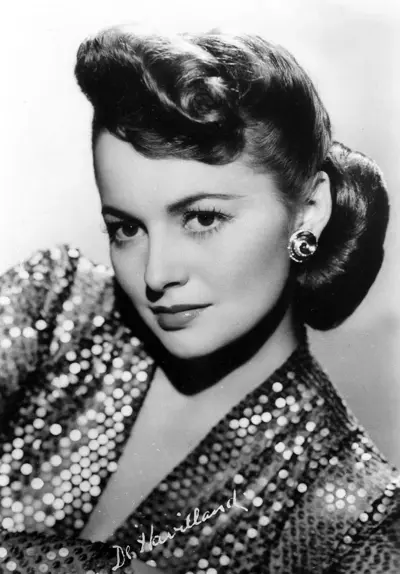
Dame Olivia Mary de Havilland DBE was a British-American actress. The major works of her cinematic career spanned from 1935 to 1988. She appeared in 49 feature films and was one of the leading actors of her time. She was the oldest living and earliest surviving Academy Award winner until her death in July 2020. Her younger sister was the actress Joan Fontaine.
