Philip Zimbardo Quotes
I was discriminated against because I was Jewish, Italian, black and Puerto Rican. But maybe the worst prejudice I experienced was against the poor. I grew up on welfare and often had to move in the middle of the night because we couldn't pay the rent.
Zimbardo, Philip. Interview by Claudia Dreifus. "A Conversation with Philip Zimbardo: Finding Hope in Knowing the Universal Capacity for Evil." The New York Times, 3 Apr. 2007.


The phrase “submerged tenth” was ironically used earlier {595222} by a great humanitarian, William Booth, 1829-1912, British Cleric & Founder of The Salvation Army to refer to the poor and the underclass of England. The Salvation Army focused on helping the submerged tenth; the Eugenics Record Office, sterilizing them. The Eugenics Record Office was an activist organization advocating the forced sterilization of those people who they deemed to be inferior from a hereditary point of view. Most Americans are today shocked to find that this organization and its ideas were so influential that more than 30 states had passed similar laws. Only California and Virginia were very zealous in carrying them out however. By 1935, 20,000 forced sterilizations had been carried out in the United States. The Supreme Court at the time even found such laws Constitutional. See {603680}.


Poverty affect many more females than males. The individual decisions or lack thereof that can cause poverty in a family are much more frequently made by men with females having little or no say in many cultures. The politicians and powerful people who control many societies and could make the system changes needed to reduce poverty are mostly men.
_0_thumbnail_47x47.jpg "William Gregg of South Carolina")
Gregg exclusively hired poor whites to work in his factory, hoping to elevate them into a more civilized—though still a menial—station, providing steady work and granting access to schools.

Even a century later the whites of Appalachia were among the poorest of the poor in America.

Very often viciousness and prejudice curtails opportunity and openness to possiblilities an can exacerbate economic dislocation.


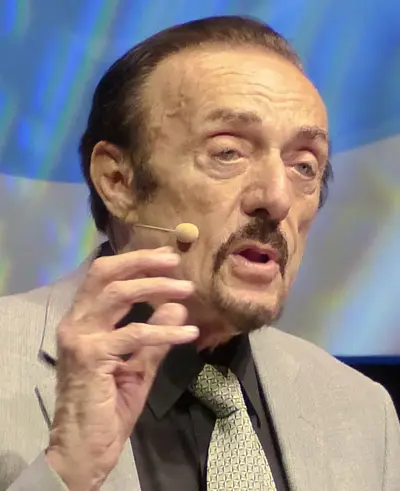
Philip George Zimbardo is an American psychologist and a professor emeritus at Stanford University. He became known for his 1971 Stanford prison experiment, which was later severely criticised for both ethical and scientific reasons. He has authored various introductory psychology textbooks for college students, and other notable works, including The Lucifer Effect, The Time Paradox, and The Time Cure. He is also the founder and president of the Heroic Imagination Project.
