Rumi Quotes
I was dead, then alive. Weeping, then laughing. The power of love came into me, and I became fierce like a lion, then tender like the evening star.
Rumi, Jalal al-Din. The Essential Rumi. Translated by Coleman Barks, HarperSanFrancisco, 1995, p. 11.


He had been beaten regularly by the white man in the area who was known for breaking “difficult” slaves. Finally he decided to risk his life and fought back subduing the white sadist. He never reported Douglass who could have been hanged because he didn’t want to lose his reputation by letting it be known that he had been beaten in a fight with a Black man. Thereafter, the two men avoided each other until Douglas ran away.


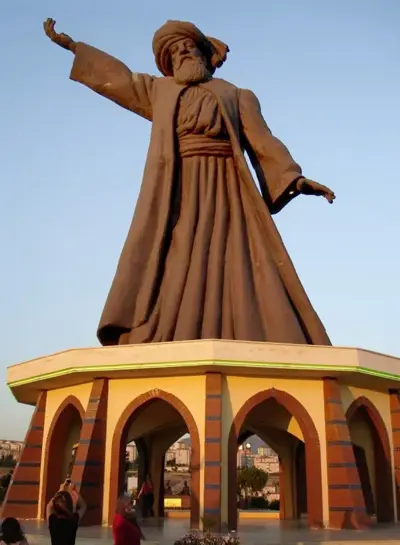
Jalāl ad-Dīn Mohammad Rūmī (Persian: جلالالدین محمد رومی), also known as Jalāl ad-Dīn Mohammad Balkhī (جلالالدین محمد بلخى), Mevlânâ/Mowlānā (مولانا, "our master"), Mevlevî/Mawlawī (مولوی, "my master"), and more popularly simply as Rumi, was a 13th-century Persian poet, Hanafi faqih, Islamic scholar, Maturidi theologian, and Sufi mystic originally from Greater Khorasan in Greater Iran. Rumi's influence transcends national borders and ethnic divisions: Iranians, Tajiks, Turks, Greeks, Pashtuns, other Central Asian Muslims, and the Muslims of the Indian subcontinent have greatly appreciated his spiritual legacy for the past seven centuries. His poems have been widely translated into many of the world's languages and transposed into various formats. Rumi has been described as the "most popular poet" and the "best selling poet" in the United States.
