Henry Mayhew Quotes
I was conducted in the evening to a tavern where several of the weavers who advocate the principles of the People's Charter were in the habit of assembling.
Mayhew, Henry. "Letter III." The Morning Chronicle, 18 Oct. 1849.


In 1902 there was a major coal strike in which Roosevelt pressured the coal operators to make concessions to labor. The abuses of some of the large monopolistic enterprises were turning large segments of America against capitalism. TR always believe that he saved capitalism from its own self destruction. The same has been felt about Franklin Delano Roosevelt who many believe saved American capitalism in the Great Depression.


The factory workers in Lynn, Massachusetts started their own newspaper: This was published four years before Marx and Engles published the Communist Manifesto


He was one of the Hollywood 10 of the McCarthy blacklist period.


Ironically, this view was also held by many of the capitalist “Captains of American Industry” who believed that all unions were revolutionist regardless of the views of the union’s membership or leadership. Even today, there are some who still equate trade unionism with communism and revolution. The majority of the unions and the left never believed that, but the extreme communists and extreme capitalists did than and some do today.


Sadova was a major battle where the Prussians defeated the Austrians. It was known to all Germans as historically key to developing a German nation.


Big Bill Haywood. Historically, the upper economic and business class, including currently, tend to view all labor organizations and unions as socialistic and or communistic and attach them for being such. However, in many industries in America today labor has a great deal of power and the industries are not socialistic or communist. The IWW however was one of the labor organizations that was based on socialism and contained many communists over the years. Haywood himself was a leader of the Socialist Party and campaigned for Eugene Debbs. Like Debbs he was convicted of an unconstitutional law of speaking against the WWI draft. Unlike Debbs who went to prison and was released later, Haywood skipped bail and lived in Russia for the rest of his life.
He had squads of thugs that he would “rent” out to other gangsters for their enforcement activities and to unions to protect themselves from goons and intimidate non union workers. However, he would not let his men work as goons and strike busters or for companies—despite huge pay offers—to keep their workers in line, a common practice at the time.

The word “smashing” is a literal translation from the Khmer language. It is not used in the metaphorical sense as we are used to. To save money, arms, bullets and resources the Khmer Rouge method of execution was to “smash” the victim’s head in with a shovel or other implement. This slogan told people literally to murder their political enemies in this brutal way.
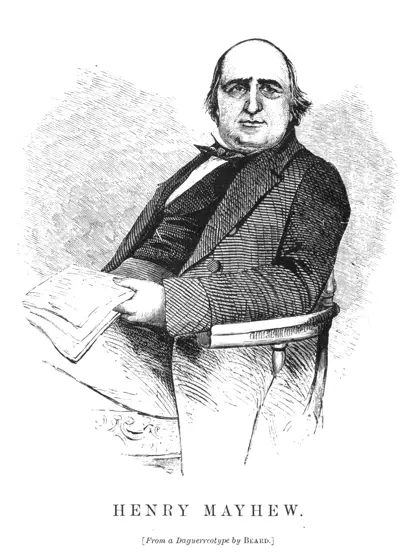
Henry Mayhew was a journalist, playwright, and advocate of reform. He was one of the co-founders of the satirical magazine Punch in 1841, and was the magazine's joint editor, with Mark Lemon, in its early days. He is also known for his work as a social researcher, publishing an extensive series of newspaper articles in the Morning Chronicle that was later compiled into the book series London Labour and the London Poor (1851), a groundbreaking and influential survey of the city's poor.
