C. L. R. James Quotes
I was a Labour Party man but I found myself to the left of the Labour party in Nelson, militant as that was. I came to London and in a few months I was a Trotskyist.
James, C. L. R. C. L. R. James: His Life and Work. Edited by Paul Buhle, London: Allison & Busby, 1986.


Supporters of medical reform include:


So often in America, citizens and government officials have made alliances or joined organizations under the theory that “the enemy of my enemy must be my friend.” It has almost always been a mistake ranging from joining the Communist Party in the 1930s to supporting the dictators or the Middle East, Asia, and South America. In the 1930s Fascism was growing and already on the march and neither America nor England—the leading democracies were not doing anything to combat the threat. America was emerging from the Great Depression, had a string Isolationist movement, and a small but influential group of Fascists and Hitler enthusiasts. Also, no one outside of Russia knew about the Stalin atrocities.


This was the typical language of the 1940’s and 1950’s at the height of the Red Scare used by the FBI and others to smear their opponents and political enemies. Seldes had published an article very critical of the FBI and its investigations of labor unions and other liberal organizations. See George Seldes, 1940 quotation.
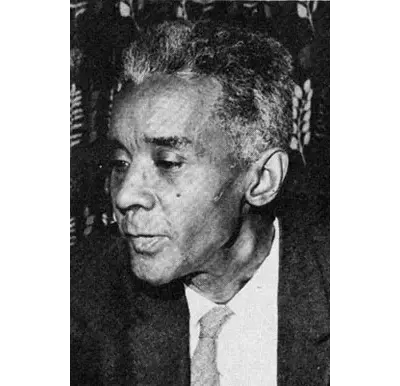
Cyril Lionel Robert James, who sometimes wrote under the pen-name J. R. Johnson, was a Trinidadian historian, journalist and Marxist. His works are influential in various theoretical, social, and historiographical contexts. His work is a staple of Marxism, and he figures as a pioneering and influential voice in postcolonial literature. A tireless political activist, James is the author of the 1937 work World Revolution outlining the history of the Communist International, which stirred debate in Trotskyist circles, and in 1938 he wrote on the Haitian Revolution, The Black Jacobins.
