James Bryant Conant Quotes
I venture to define science as a series of interconnected concepts and conceptual schemes arising from experiment and observation and fruitful of further experiments and observations. The test of a scientific theory is, I suggest, its fruitfulness.
Conant, James Bryant. On Understanding Science: An Historical Approach. Yale University Press, 1947, p. 24.


He was addressing the misunderstanding that many laypeople and most anti-evolutionists have that if Evolution is only a theory why put so much stock in it. The layman often uses the word “theory” in opposition to “fact.” But to the scientist theories are of different types—those that are as of yet speculation and those for which a strong body of evidence exists. Evolution, like Relativity, has a huge amount of evidence supporting it. Yet in time every good scientist knows that all these proven theories will be modified with new knowledge. Relativity has been demonstrated as having errors initially by Einstein himself. The essence of these things are true although elements change. The early law of gravity is the best example. We know that it is wrong in many, circumstances—in space for example. But it, none the less, is fundamental to much analysis and with our much more sophisticated understanding of it we still talk of the “Law” of gravity even though we realize that it is not quite correct in all circumstances.
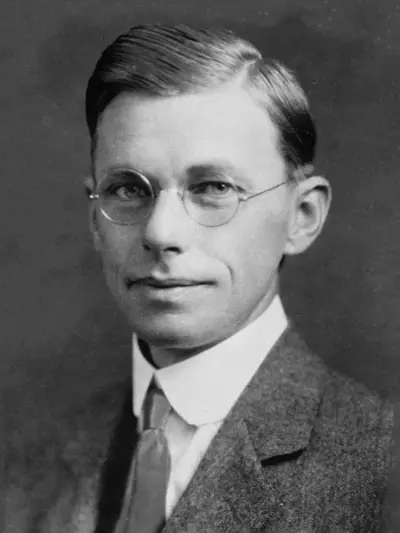
James Bryant Conant was an American chemist, a transformative President of Harvard University, and the first U.S. Ambassador to West Germany. Conant obtained a Ph.D. in Chemistry from Harvard in 1916. During World War I he served in the U.S. Army, working on the development of poison gases, especially Lewisite. He became an assistant professor of chemistry at Harvard in 1919 and the Sheldon Emery Professor of Organic Chemistry in 1929. He researched the physical structures of natural products, particularly chlorophyll, and he was one of the first to explore the sometimes complex relationship between chemical equilibrium and the reaction rate of chemical processes. He studied the biochemistry of oxyhemoglobin providing insight into the disease methemoglobinemia, helped to explain the structure of chlorophyll, and contributed important insights that underlie modern theories of acid-base chemistry.
