Andrew H. Knoll Quotes
I think you can say that life is a system in which proteins and nucleic acids interact in ways that allow the structure to grow and reproduce. It's that growth and reproduction, the ability to make more of yourself, that's important.
Knoll, Andrew H. "Life's Little Essential." NOVA, Public Broadcasting Service, 1 July 2004, www.pbs.org/wgbh/nova/origins/knoll.html.


Darwin’s work had polarized England into two camps. Spencer was one of the major public supporters of Darwin. Tennyson expressed a similar intuitive view a decade earlier {627586}. Spencer reasoned that if an egg cell and a sperm cell could produce a human in 9 months, why was it not plausible that the cell could become a human in hunreds of millions of years.


As early as this was in scientific history, he essentially described the process whereby new species are formed by the mutation from the old series.


Fisher, a brilliant scientist and mathematician, engaged in some major blunders like denying that tobacco had any relationship to lung cancer and other disease. This was another. His “conclusion” that the more “successful” members of society should breed in preference to the less successful. There are three major fallacies in his argument and that of other eugenics supporters other than the obvious ethical and moral problems. First, human success in any society is determined by both genetic and environmental factors. In general, it is currently impossible to know who the successful would be if environmental factors were equal. Second, our concept of success is quite narrow from an evolutionary point of view. The most successful humans might be those who produce that most children, or those who extend man’s habitat, or those who will be most resistant to a pandemic that will arise in the near future. Third, by the standards of much of English society at the time, the most “successful” people were the monarchy and heredity aristocracy, There was already too much inbreeding in these groups and increasing this groups breeding rather than others would not only weaken the species over time, but would limit the variation that is necessary for natural selection and further evolution of the human species.
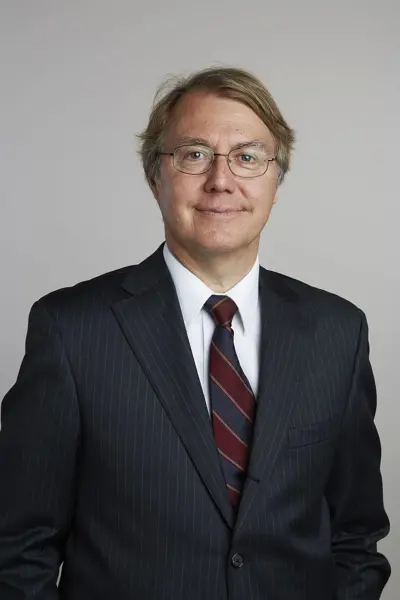
Andrew Herbert Knoll (born 1951) is the Fisher Professor of Natural History and a Professor of Earth and Planetary Sciences at Harvard University. Born in West Reading, Pennsylvania in 1951, Andrew Knoll graduated from Lehigh University with a Bachelor of Arts in 1973 and received his Ph.D. from Harvard University in 1977 for a dissertation entitled "Studies in Archean and Early Proterozoic Paleontology." Knoll taught at Oberlin College for five years before returning to Harvard as a professor in 1982. At Harvard, he serves in the departments of Organismic and Evolutionary Biology and Earth and Planetary Sciences.
