Kimberle Williams Crenshaw Quotes
I think it's important for the American people to know that the position of originalism isn't itself an originalist position.
Crenshaw, Kimberlé. Interview by Amy Goodman. Democracy Now!, 15 Feb. 2016.


Two openings appeared on the Supreme Court for Nixon to fill. He heard from many people on recommendations, but he wanted to fill the posts with “strict constructionists.” Rehnquist had written giving him a political operational definition of a strict constructionist. This memo was never released to the public by the White House on the grounds that it was protected by Executive Privilege. However, the definition given had virtually nothing to do with the concept of strict construction but is a definition of a ideological conservative constructing his own meaning to the Constitution. The source for the text came from John Dean, the Counsel to the President, who found this memo in his White House file and revealed it at a question and answer session at the Commonwealth Club of San Francisco, October 10, 2001.


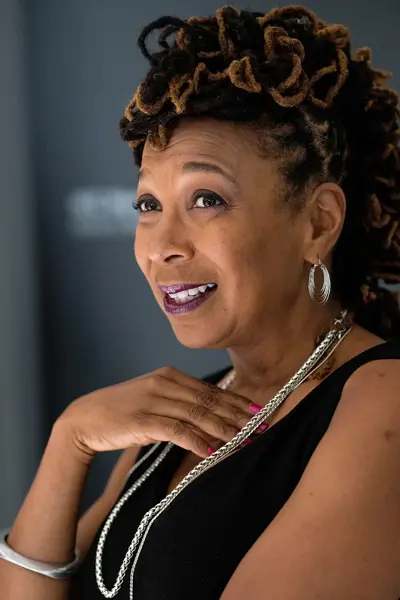
Kimberlé Williams Crenshaw (/ˈkɪmbərli/; born 1959) is an American lawyer, civil rights advocate, philosopher, and a leading scholar of critical race theory who developed the theory of intersectionality. She is a full-time professor at the UCLA School of Law and Columbia Law School, where she specializes in race and gender issues. Crenshaw is also the founder of Columbia Law School's Center for Intersectionality and Social Policy Studies (CISPS) and the African American Policy Forum (AAPF), as well as the president of the Berlin-based Center for Intersectional Justice (CIJ). Crenshaw is known for the introduction and development of intersectionality, the theory of how overlapping or intersecting social identities, particularly minority identities, relate to systems and structures of oppression, domination, or discrimination. Her scholarship was also essential in the development of intersectional feminism which examines the overlapping systems of oppression and discrimination to which women are subject due to their ethnicity, sexuality and economic background.
