Michelle Alexander Quotes
I think it's critically important for people to understand that this system of mass incarceration governs not just those who find themselves in prison on any given day, but also all those who are in jail, on probation or parole, as well as all those who are just months away from being locked up again because they are unable to find work or housing due to their criminal record.
Alexander, Michelle. "The New Jim Crow: An Interview with Michelle Alexander." Interview by Jody Sokolower. Rethinking Schools, vol. 26, no. 2, Winter 2011-2012.


This is a paradoxical aspect of the parole system. If someone is granted parole, they must agree to state supervision of them for as long as the state deems it important. Random drug tests, access to their bank accounts, reporting any gang member may may contact and reporting to the parole board periodically are but 4 examples of the kind of supervision that can be required, So if a perceived dangerous criminal is considered too risky for parole after say ¾ of his sentence has been served, her serves the other ¼ and then is totally free and may not be supervised. He can move wherever he wants, do any kind of work he wanted and hank out with whoever he wants and the state can do nothing. If he had been granted parole he could be monitored and supervised as long as the state thinks it necessary.


This quotation is surprising to many because the National Association of Evangelicals is a very conservative organization which is usually at the right wing of political and social issues. However, religions are generally more complex with nuanced positions compared to political parties. On the issue of Prisons, the National Association of Evangelicals is at the left wing of the political spectrum.


Mental illness is the cause of many crimes and treatment can prevent many of them. However, another reason we see so many in jail with mental disase is that the laws mak invountary committment to mental instittuions almost impossible, so when mentally ill people are behaving anti socially and refuse to get mental treatment, most communities resort to teh criminal courts and jail. In many part of America, there are no professionals who can even tell the difference between a criminal with and a criminal without mental disease. See Quotation 644075.


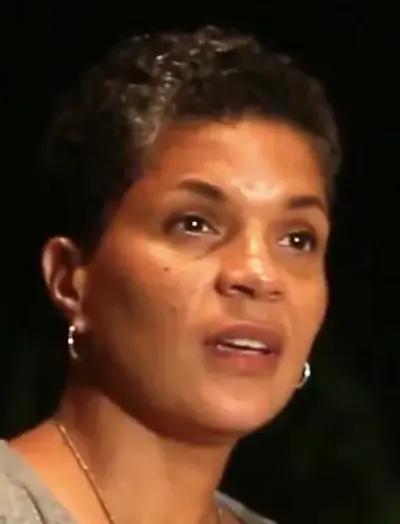
Michelle Alexander is a writer, civil rights advocate, and visiting professor at Union Theological Seminary (New York City). She is best known for her 2010 book The New Jim Crow: Mass Incarceration in the Age of Colorblindness, and is an opinion columnist for The New York Times.
