John le Carre Quotes
I think, increasingly, despite what we are being told is an ever more open world of communication, there is a terrible alienation in the ordinary man between what he is being told and what he secretly believes.


Wikileaks had just released 400,000 classified American documents relating to the Iraq War. Many accused him and Wikileaks of endangering the lives of not only soldiers, but Iraq civilians who might be identified as cooperating with the coalition forces by the released documents. The heart of the problem is that governments tend to use classification to hide embarrassing facts or policies that might be controversial as well as to protect legitimate national security secrets and sources and methods of information. The majority of the 400,000 leaked documents, when examined, were clearly not protecting any legitimate people or secrets but just staved off criticism or embarrassment; in many cases, there was no value to the contents and the maw of the censorship and classification process was applied indiscriminately to many documents. A much better argument than Assange made, can be gleaned from the vast number of WWII documents that America, England, France, Russia and others still keep secret, when the people who might have been protected have already died and the methods are long since obsolete.


Referring to the tactics of the opposition Republican party.


See {583419} for more on this technique.


Most CIA Directors have not had this extreme attitude, but because Casey did, journalists, members of Congress, other government officials and even Presidents have often distrusted the CIA and their personnel more than was necessarily warranted.


There have been tides of public trust that ebb and flow in almost every decade.
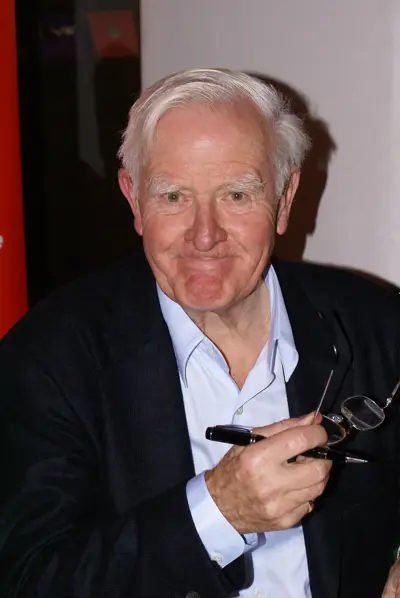
David John Moore Cornwell, better known by his pen name John le Carré (/ləˈkæreɪ/), was an English author with Irish citizenship, best known for his espionage novels. During the 1950s and 1960s, he worked for both the Security Service (MI5) and the Secret Intelligence Service (MI6). His third novel, The Spy Who Came In from the Cold (1963), became an international best-seller and remains one of his best-known works.
