Gilbert K. Chesterton Quotes
Half a truth is better than no politics.
Chesterton, G. K. The Illustrated London News, 1905.


Even as late as the 1970s most media organizations did not feel any inhibition about having a spokesperson for a political movement or candidate comment about statements that were clearly untrue. The constant political criticism of the media produced this change and no matter how absurd or false a political statement is, most media will have a spokesperson for the lie appear on the program to repeat the lie. Both political parties are thereby encouraged to exaggerate or even lie as they will never by exposed by trusted journalists and can reduce all falsehoods to a “he says, she says.”

Ryan told the national audience that President Obama had come to a factory in his district that as rumored to be closed. Obama had told the workers that the Federal government could assist and keep the factory open for many years. Then as Ryan explained, the factory closed the following year. He gave this as an example of Obama not keeping his word. However what Ryan did not say was that Obama had made the speech at the factory when he was a candidate for the Presidency, and then the factory was closed while George W. Bush was President and by the time he took office, the closure was done and the factory machines gone. And when Obama took office, our national economy was within days of complete bank and finance collapse. Obama saved most of the banks and then the American automobile industry. To suggest that Obama could have or should have done something for the factory that closed was shockingly misleading. It would have been a minor issue if some party hack had lied and made the same accusation. But this was the Vice Presidential Candidate whose acceptance speech was assumedly vetted by the Presidential Candidate’s staff. That is why the quotation was so memorable.


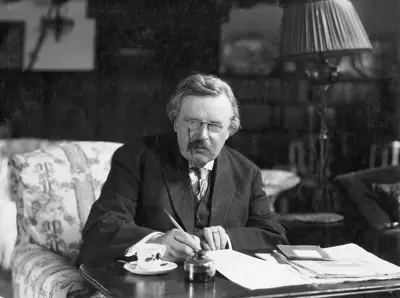
Gilbert Keith Chesterton KC*SG was an English writer, philosopher, lay theologian, and literary and art critic. He has been referred to as the "prince of paradox". Time magazine observed of his writing style: "Whenever possible Chesterton made his points with popular sayings, proverbs, allegories—first carefully turning them inside out."
