John le Carre Quotes
I suffer from the same frustration that every decent American suffers from. That is, that you begin to wonder whether decent liberal instincts, decent humanitarian instincts, can actually penetrate the right-wing voice, get through the steering of American opinion by the mass media.


Kennedy was dining with Time Magazine publisher Henry Luce soliciting support for JFK's presidential candidacy. Luce observed that JFK to obtain the Democratic nomination would have left-of-center domestic policies. Luce was right and the father, wrong.


So far as he was concerned, Republican moderates—his own party members—were liberals. Anyone who did not support the extreme Conservative agenda, was an enemy and a liberal. He and the Tea Party drove almost all the moderate Republicans out of the party.


Agree resigned from the CIA in protest to its political positions.

Actually, there have been “paranoid” fear of opposition political viewpoints in America very often. In the early days of the Republic, the Federalists main concern was not England or other foreign enemies, but Jefferson’s Democratic Republicans. And those Jeffersonians were absolutely convinced that the greatest danger to America was the Federalists who would bring back a monarchy if they could. The Jacksonians triggered a similar polarization. The Civil War stemmed from this extreme. Even America’s most popular President, Franklin Delano Roosevelt, who was elected to 4 successive terms, was perceived as the major “enemy” of America along with his wife Eleanor and the other New Dealers.

This was a new political phenomenon where a President was perceived as more important, more powerful, and preferable to his party. Note that the base of the scale is labeled “Public Opinion”.


Muller warns of a very common error made by most politicians and critics who are faced with populism. To ignore them is also self defeating. Best results seem to come from just calmly present factual counter evidence to whatever is being alleged at the moment. And to acknowledge their right in a democracy to think as they do, but we respectfully disagree. The respect is very important in interacting with populists whose major complaint is most often that they are not regarded with dignity in the society as it now exists. And for many educated, above-average intellect people, there is a difficulty in extending their egalitarian philosophy to those who do not honor, respect or even understand the major tenets and norms of intellectual interaction. In most cases, the politicians who have populist appeal not only treat the people with great dignity and appreciation (feigned or real), but take of the cry for their complaints and suspicions in more eloquent oratory that the disaffected people are able to themselves, and that is a great part of the seemingly magic hold that the populist politician seems to have over his constituency.


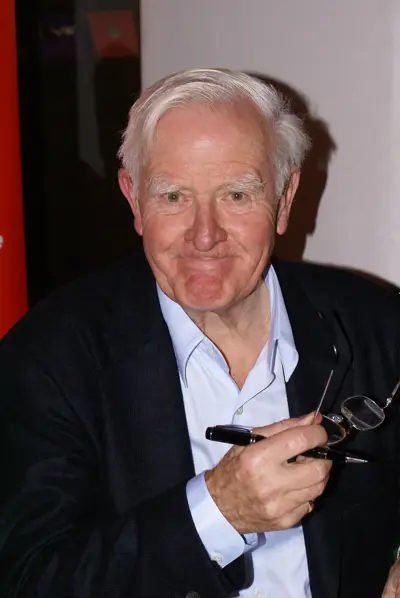
David John Moore Cornwell, better known by his pen name John le Carré (/ləˈkæreɪ/), was an English author with Irish citizenship, best known for his espionage novels. During the 1950s and 1960s, he worked for both the Security Service (MI5) and the Secret Intelligence Service (MI6). His third novel, The Spy Who Came In from the Cold (1963), became an international best-seller and remains one of his best-known works.
