Calvin Coolidge Quotes
I sometimes wish that people would put a little more emphasis upon the observance of the law than they do upon its enforcement.
Coolidge, Calvin. The Autobiography of Calvin Coolidge. Cosmopolitan Book Corporation, 1929.


Selling alcohol and running saloons were against the law then in Kansas but there was no effort to enforce it anywhere in Kansas. Carrie Nation went into saloons and literally smashed the classes, signs, mirrors and furniture with an ax.

The Egyptian Army, responding to huge demonstrations, ordered the Muslim Brotherhood President to step down in what appeared to be a coup d’etat. There was an American law that required a cut off of foreign aid to any government that had come to power. The American Administration and most of Congress did not want to terminate foreign aid to Egypt, and announced that it could not come to a conclusion as to whether or not there was a coup. They did not say that there was no coups—they just decided not to decide. Since there was no finding of a coups, there was no cutoff. Senator Paul and a few other Senators, observing that there had been a coup, wanted the administration to cut off the foreign aid even though it would be detrimental to our foreign policy. The government must obey the law they argued, regardless of the consequences.


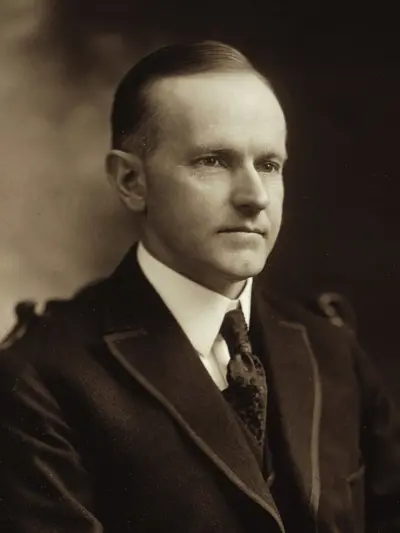
Calvin Coolidge was an American lawyer and politician who served as the 30th president of the United States from 1923 to 1929. A Republican lawyer from New England, born in Vermont, Coolidge worked his way up the ladder of Massachusetts state politics, eventually becoming governor of Massachusetts. His response to the Boston Police Strike of 1919 thrust him into the national spotlight and gave him a reputation as a man of decisive action. The next year, he was elected the 29th vice president of the United States, and he succeeded to the presidency upon the sudden death of Warren G. Harding in 1923. Elected in his own right in 1924, he gained a reputation as a small-government conservative and also as a man who said very little and had a rather dry sense of humor.
