Agesilaus II Quotes
I shall show that the place does not honor the man, but the man the place.
Plutarch. Moralia, Volume III. Translated by Frank Cole Babbitt, Harvard University Press, 1931, p. 245.


1st Baron & 1st Marquis Curzon of Kedleston

See {632269} for a later Scottish quotation on this principle.


John Adams was more concerned about the titles and forms of address of the President and Vice President than most of the Founding Fathers. Having spent time in London and Paris representing the nation, he was concerned about the dignity and symbolism of office. McCullough added this insight.

Maria, after being ousted by her former friend, General Baldomero Espartero, comments on his lack of respect.


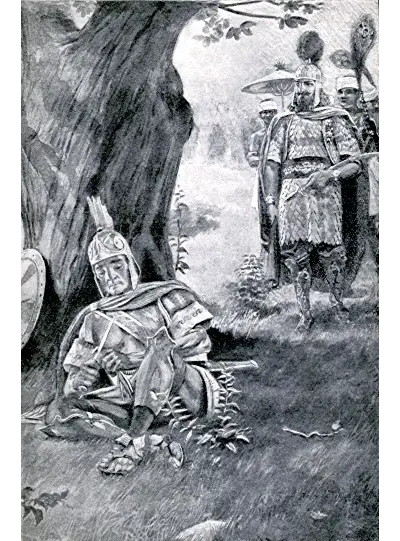
Agesilaus II (/əˌdʒɛsəˈleɪəs/; Greek: Ἀγησίλαος Agesilaos; c. 444/443 – c. 360 BC), was a king (basileus) of the ancient Greek city-state of Sparta and a member of the Eurypontid dynasty ruling from 398 to about 360 BC usually, in Plutarch's words, "as good as though commander and king of all Greece" and was for the whole of it greatly identified with his country's deeds and fortunes. Small in stature and lame from birth, Agesilaus became ruler somewhat unexpectedly in his mid-forties. His reign saw successful military incursions into various states in Asia Minor, as well as successes in the Corinthian War, but several diplomatic decisions resulted in Sparta becoming increasingly isolated prior to his death at the age of 84 in Cyrenaica.
