F. Sionil Jose Quotes
I said that if I were an industrialist or entrepreneur, I would invest in agriculture-based enterprises, for there is so much that can be done in manufacturing, in food preservation.
José, F. Sionil. Termites in the Sala, Heroes in the Attic: Why We Are Poor. Solidaridad Publishing House, 2005.


Inscribed in the South Lunette of the Library of Congress


This quotation is historically important because it documents the radical change in agriculture that technology brought on. In this period it was steam power. There were steam powered tractors in addition to what he enumerated. The production cost and hence the prices of agricultural products became much lower increasing the standard of living for all consumers. However, the small farmer, without capitol and the scale of a large enough farm, was put in a position in that he could not compete with the major products of agriculture without huge investment in capital equipment and large enough farms. While many went out of business, many others shifted to specialized crops and raising animals where the automation was not as necessary. This process has been on going in American agriculture since the invention of mechanized farm implements, and the small farmer has gradually become more rare. But the process has been ongoing throughout American history.
At the time the vast majority of Americans were farmers. That is the tradition and reality which caused the Department of Agriculture to become one of the most important cabinet departments. However, by the 21st century the Department of Agriculture had over 100,000 employees plus many more consultants and contractors. They had done their job so well that productivity eliminated the need for most of the farms. And the number of people earning the majority of their living as farmers is less than 1 million. So there are only 10 farmers for each employee of the Agriculture Department.
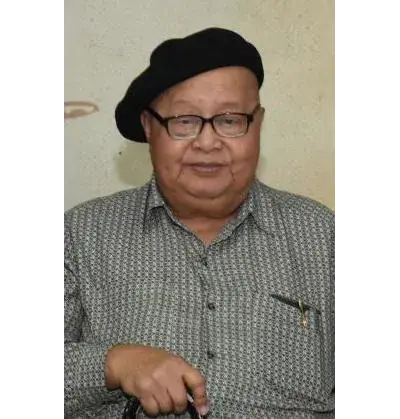
Francisco Sionil José is one of the most widely read Filipino writers in the English language. His novels and short stories depict the social underpinnings of class struggles and colonialism in Filipino society. José's works—written in English—have been translated into 28 languages, including Korean, Indonesian, Czech, Russian, Latvian, Ukrainian and Dutch.
