Vyacheslav Mikhailovich Molotov Quotes
I propose that we insert a "not" before every verb in the text.
Vyacheslav Mikhailovich Molotov, 1890-1990, Russian Foreign Minister, Procedural motion during a negotiation with the U. S. delegation., Quoted in L. Mosley, Dulles, 1978
Sourced by: Eigen's Political and Historical Quotations


The immediate crisis had been averted and no more nuclear missiles would enter Cuba. But we had no leverage to get the few that were already there removed and it would be politically very difficult for the Kennedy administration to get the public to accept ANY nuclear missiles in Cuba. Hence, Stevenson’s statement. See {634554}. Neither side had great intercontinental ballistic missile capability at the time, and we had placed a large battery of missiles in Turkey very close to the Russian border. This gave the U. S. a major military advantage. We could deliver many more nuclear warheads to Russia than they could to the United States. The Russians with this proposal hoped to even the capability. The military advisers and the security and State Department advisors all thought that the U. S. should not give up its nuclear superiority. However, we had no international legal basis for denying the Cubans the right to locate any weapons on their soil, so to prevent the Communists from having nuclear missiles in Cuba we would have to use force which could easily escalate into a nuclear war. Kennedy and McCone both thought that since we had intercontinental ballistic missiles in production and coming on line and would not need the Turkey Missiles to strike all over Russia. So giving up our missile advantage for a short time would not expose us to any undue risk. The other advisors worried that the production of the ICBMs could be delayed—weapons systems were (and are) notoriously longer in production than estimated or planned. They also thought that the morale of the military and civilian population would suffer when they learned that we had given away our military advantage. There was a macho element in their thinking in that we would be giving in to intimidation and look like we were afraid to fight. Last, the political advisors thought that the right wing hawks would pillory the administration for its cowardice in allowing itself to be intimidated by the Russians. Their doctrine was that when faced with force, the Communists will always back down. In the final deal we agreed to remove our missiles from Turkey in 6 months and this would be done in complete secrecy and the Russians would keep the deal secret. That way, Kennedy got 6 more months of production which turned out to have been enough. The public would never know till years later and the Conservatives would not be able to publicly castigate Kennedy. Meanwhile, the conservatives would continue to believe that the Russians backed down in the face of force—the naval blockade as this was ‘proved’ their doctrine when the Russians had not backed down at all. The strategy and tactics of the Kennedy administration are still analyzed and argued about today with many Americans just realizing that we did not intimidate the Russians with force or the threat of force to remove their Cuban missiles.


By the standards of the rest of the world the North Korean policies and actions were at the time irrational and inconsistent and explained in a manner which defied any norms that any other nation’s leaders could understand and explain.

Ironically America bought the Louisiana Territory from the French, and the French traded Canada to England for Guadalupe. These are probably the two worst real estate deals ever made by a nation—and it was the same nation in both cases.


The President was spending all day and most of the evening with Japanese and Russian negotiators. He was trying to mediate an end to the Russo-Japanese War. Despite all the difficulties, Roosevelt found a new skill of personal international diplomacy. The war seemed intractable, but Roosevelt was able to get a peace treaty signed for which he was awarded the Nobel Peace Prize. It is doubtful that any modern president could spend so much concentrated time on an issue that was really not in the national interest of the United States. However, Roosevelt’s time and effort investment paid off in that by settling that dispute and getting nothing out of it for America or American business, the United States was in world opinion, elevated to a new status of fair, impartial and non-selfish international activity—a model that despite some lapses in later years, the United States has been unique.


In 2002, when Prodi made this offer on behalf of the EU, teh Russian economy was close to complete collapse, there was incufficient medicne available, the military was in disarray, and the EU thought that it could take advantage of Russia's weakness to offer them some economic benefits without the complications of even giving Russia the same degree of power and influence as Poland--Russia's former satellite. Russia's pride and dignity were offended. They rejected the arrangement and when Putin became President he began a very aggressive policy of pushback against NATO and EU expansion Eastward. Many political scientists feel that it would have been better had the EU not offered anything at all rather than the highly one-sided proposal that they made.

Often diplomats and negotiators, coming from different cultures and different counties, and having different points of view and previous experiences, don't even have the same view of that they are there for, what is the object of their negotiations, what the problem or problems are. Sullivan observes that this often takes more time than the actual negotiations.


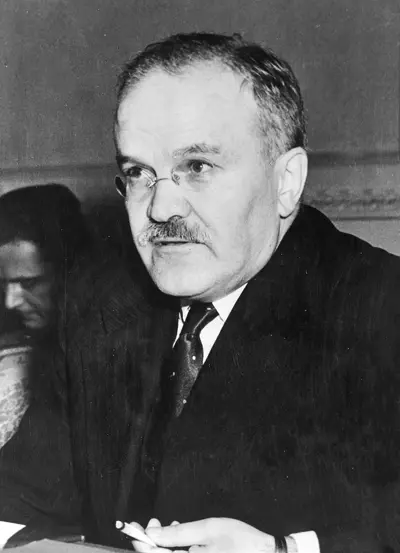
Vyacheslav Mikhailovich Molotov was a Russian politician and diplomat, an Old Bolshevik, and a leading figure in the Soviet government from the 1920s onward. He served as Chairman of the Council of People's Commissars from 1930 to 1941 and as Minister of Foreign Affairs from 1939 to 1949 and from 1953 to 1956.
