Ben Bradlee Quotes
I never believed that Nixon could fully resurrect himself. And the proof of that was in the obits.
Bradlee, Ben. A Good Life: Newspapering and Other Adventures. Simon & Schuster, 1995.


Before the 1968 election, President Johnson, and gotten the North Vietnam Communists to agree to Peace Talks with the U. S. and South Vietnam. Then Candidate Nixon thought that if the peace talks were ongoing and making progress, there would be more support for the Democrats and Nixon's opponent Hubert Humphrey. So Nixon secretly send a secret emissary to South Vietnamese President Nguyen Van Thieu telling him that he would not get a very good deal because President Nixon claimed that President Johnson was too eager to end the Vietnam war. He suggested that if Thieu boycotted the peace talks, then when Nixon was elected, he would guarantee a much better deal for South Vietnam and Thieu personally. President Thieu boycotted the peace talks and there could be no progress. However there is a Federal Law, the Logan Act, that makes it a felony for a private American citizen to conduct or interfere with foreign policy or negotiations with a foreign government. President Johnson found out about Nixon's sabotage of the Peace Talks, called Nixon (see {583263}) and threatened him with prosecution if he interfered further. LBJ had decided that with the left wing at odds with the U. S. Government over the Vietnam war, a prosecution of Nixon would cause the Right Wing to challenge the government also and the country didn't need further polarization. He would do that only if Nixon did not heed the President's warning. But when Nixon won the election and became President, he was terribly anxious that his pre-election crimes would be made public, and spent much of his time and staff effort trying to find out who knew about his politically self-serving felony and who might make his crime public.

During his 1976 presidential campaign, Carter told reporters that they had treated him very well so far. "Compared to what?" asked one reporter. Carter shot back:

See {609999} , {624747} , {45720} for more quotations regarding the summit meeting.

Hartman and the other few advisors who Ford had consulted had opposed the idea of a Nixon pardon. However, Ford went ahead with it, and it probably cost him the reelection. Most people two decades later tended to agree with Hartman’s later view in this quotation.


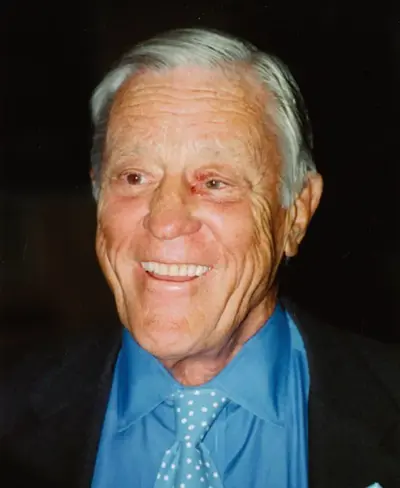
Benjamin Crowninshield Bradlee was one of the most prominent journalists of post-World War II United States, serving first as managing editor, then as executive editor at The Washington Post, from 1965 to 1991. He became a public figure when he joined The New York Times in publishing the Pentagon Papers and gave the go-ahead for the paper's extensive coverage of the Watergate scandal. He was also criticized for editorial lapses when the Post had to return a Pulitzer Prize in 1981 after it discovered its award-winning story was false.
