Susanna Moore Quotes
I lived in Calcutta for five months in 1999. While I was there, I read many journals, diaries, collections of letters and histories.
Moore, Susanna. Interview by Robert Birnbaum. Identity Theory, 20 Sept. 2007.


The Partition was accompanied by over 2 million murdered Indians as India was divided into a smaller India with almost all the Hindus and Sikhs and a slight majority of the Muslims and Pakistan with all Muslims who made that choice. Pakistan has been trying to de stabilize the area ever since to gain control of more land and became a theocracy and military dictatorship—sometimes de facto and sometimes de juro.


The debate was on a proposal to increase the female marriage age to 14. Most objected to it on the grounds that it violated Hindu religious tradition.
In 1942 it was clear that India would be given its independence soon. There were a number of sticky problems in doing so. One was the fact that when the British came to India, all the states were ruled by Maharajas (Princes, Kings, etc.). The British signed treaties with almost all of them guaranteeing to protect and preserve their local powers in exchange for acceding to British Rule of the national government. But when it came time for independence, democracy was the mode—even in England. The Maharajas insisted that the British leave them with their control of their states as they had agreed, as opposed to creating democratic government at the state level. In the final analysis, the Maharajas lost all their governmental functions and privileges but were able to retain much of their wealth.

The Somnauth Temple was one of the holiest of Hindu shrines in India. It had been attacked, looted, and destroyed several times since its erection before the birth of Christ. A Northern Warlord Ruler had raided the temple and stolen the spectacular gates at the tomb. When the British Indian Army of Indians led by British officers and NCOs, conquered the Warlord area, Lord Ellenborough had the huge gates removed and returned to the Somnauth Temple issuing this proclamation which he arranged to have approved by Queen Victoria and have Parliament vote to return the gates. It was a brilliant historical instance of symbols having enormous political effect. Hindus throughout India, most of whom had forgotten about the stolen temple gates, had the British to thank for righting one of the great wrongs of Hindu history.
As early as 1933, 14 years before Indian independence, there was a movement for a separate Muslim nation within India. Ironically, Hindu India was never a nation in any sense of the word, but was a series of independent principalities much like Italy before its unification. However, with the Muslim conquest of the various Indian states, there was a central authority, ruler, and nation for the first time. Later the Muslims had to argue that India was not a country when it was they who had made it such. When the Muslim Emperors were in power, they argued that India was one country under their authority. But when they lost power, the Muslims argued the other side of the issue.
The Sepoys were Indian natives serving as enlisted men in the British Army in India. Napier had been the Commander of the British Forces in India and resigned over a dispute with the government. This quotation came from his negative report. Not long after he wrote this, the “Sepoy Rebellion” in 1857 almost destroyed English rule in India.


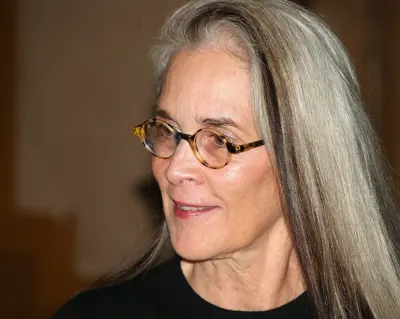
Susanna Moore is an American writer and teacher. Born in Pennsylvania but raised in Hawaii, Moore worked as a model and script reader in Los Angeles and New York City before beginning her career as a writer. Her first novel, My Old Sweetheart, published in 1982, earned a PEN Hemingway nomination, and won the Prize for First Fiction from the American Academy of Arts and Letters. She followed this with The Whiteness of Bones in 1989, and her third novel, Sleeping Beauties, in 1993. All three of these novels were set in Hawaii and charted dysfunctional family relationships.
