Nat Hentoff Quotes
I know [Arthur Koestler] fought in the Spanish Civil War. He was in prison, I think, in Spain and in Russia. He came to the United States; that's when I saw him in the mid-1940s.
Hentoff, Nat. Interview by Brian Lamb. Booknotes, C-SPAN, 2 Nov. 1997.

At the end of WWII there was much tension between Russia and the Anglo-American alliance. This plan was developed but never implemented. See {613195} for Prime Minister Winston Churchill’s description of the invasion idea.


He was thrown out of the Labour Party for his pro Cold War and Soviet statements.


This fact was one of the reasons that McCarthyism and HUAC were able to get traction. The Red Scare paranoids found something to really worry about. They overreacted, sensing the problem not as one of a large number of misguided and naïve people trying to help America do better, but as active spies controlled by the Kremlin who wanted to destroy the American way of life. There were two basic reasons these naïve officials acted that way. Many of them had not forgotten the devastation of the American people in the Great Depression and believed that capitalism had almost failed completely and the rough edge had to be taken off American capitalism by injecting some socialist principles such as stronger labor unions, ending racial and religious discrimination, controlling monopolies, and regulating critical industries. They also were mindful of the fact that the Russians were bearing the brunt of the WWII casualties—military and civilian—while killing more of the Germans and capturing more German occupied territory than the other allies together, yet they were not receiving the same level of assistance—technical, intelligence, economic and political as the British. They saw helping the Russians as saving American lives on the battlefield by making them more effective and keeping German soldiers and weapons away from the Western front and Americans. They also remembered that many in Congress were opposed to our entering WWII in Europe until Germany declared war on America. They had in many cases been apologists for Fascism and passionate enemies of communism. Some American industrialists like Henry Ford were anti-Semitic and overt admirers of Hitler. {586985} So these officials tried to redress the imbalance that existed while at the same time little was really known about Soviet Russia and the Stalin excesses that were as bad as some of Hitler’s. {634969} The only information Americans had were the terrible casualties the Russians were taking and the in kind that they were dishing out to the Germans. The number of Soviet spies in America were few and commensurate with the number of agents we had in Russia. But few Americans realized the difficulty the U. S. and the rest of the democratic world would have with Russia after the war was won.


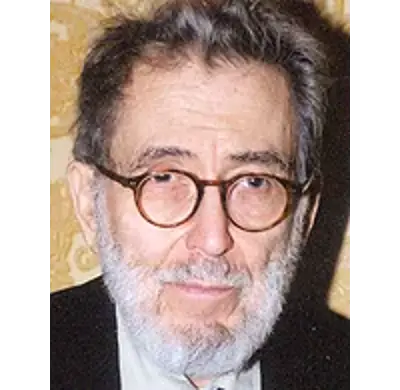
Nathan Irving Hentoff was an American historian, novelist, jazz and country music critic, and syndicated columnist for United Media. Hentoff was a columnist for The Village Voice from 1958 to 2009. Following his departure from The Village Voice, Hentoff became a senior fellow at the Cato Institute and continued writing his music column for The Wall Street Journal, which published his works until his death. He often wrote on First Amendment issues, vigorously defending the freedom of the press.
