Daniel Inouye Quotes
I hope that the mistakes made and suffering imposed upon Japanese Americans nearly 60 years ago will not be repeated against Arab Americans whose loyalties are now being called into question.
Inouye, Daniel K. "Statement of Senator Daniel K. Inouye on the Aftermath of the Terrorist Attacks." Washington, D.C., 13 Sept. 2001.


The Proclamation was a belated admission of the disgraceful internment of loyal Japanese Americans during WWII. See {587961}. “Evacuation” was the euphemism for rounding up Japanese American citizens and putting them in internment camps. Not a single Japanese American was involved in any effort to sabotage or undermine the United States. The same cannot be said about the German Americans where a few did work against U. S. interests and yet the German-Americans were never rounded up. The explanation of the difference has been long debated. Racism was a part of it; California paranoia, another. And unfortunately, Japanese Americans owned very desirable land in California and when they could no longer make their payments some interests gobbled up the land and that was a motivation for some. Regardless, it was one of the low points in American history, and warranted this Presidential and national apology.


the attack on Pearl Harbor


This racist officer was the impetus for one of the terrible wrongs in American history but most of the national establishment and FDR himself signed off on it to his everlasting disgrace. See {587961} and {635792}.


Goldsmith headed the Justice Department Office of Legal Counsel—the office that makes legal opinions to guide the Federal Government’s conduct. The George W. Bush White House had decided that the War on Terror required spying on American citizens under certain circumstances but the existing laws required that in each case, they obtain a warrant from a special FISA (Foreign Intelligence Surveillance Act) Court. They were afraid that the court might not grant the warrants in all cases so in some cases ignored the requirements to go through the court. Addington and some other White House staff felt that if there was one more terrorist incident in the United States, they could pressure Congress into getting rid of the FISA court.


In the aftermath of 9-11, there was a call for giving the law enforcement agencies more authority and the Patriot Act was passed in haste and fear. Some law enforcement personnel then went about picking up Arab Americans and in many cases holding them incommunicado without any charges. No terrorists were discovered by this process and yet good American citizens were abused, traumatized and insulted. In our zeal to protect American freedom, we actually began to resemble some of the capricious and abusive practices of our undemocratic enemies. There were other abuses allowed under the Patriot Act, but at the time of this writing the extent had not yet been revealed, but the refusal of the authorities to make public the national security benefits suggests that there was not much national security benefit and much abuse.

In one of the great American disgraces, during WWII, American citizens of Japanese ethnicity were forced into an “evacuation” into camps for the duration of the war. German American citizens were not similarly treated. There was not a single act of sabotage or anti war propaganda by Japanese Americans before (or after) the “evacuation.” Many German Americans were so involved but never interned, but one of the major motivations was to get the valuable farmland owned by many Japanese on the West Coast. (The Japanese American citizens could not work or earn the money to pay the mortgages or taxes on their property and the white Californians were able to acquire the land for very little. Many believe this was the real motivation for the Japanese American incarceration as there was none such on the East Coast where there were few Japanese American land holdings.
The initial reaction was to prevent Japanese from leaving the area, being out at night, or spending their assets. Incredibly, Japanese-American citizens who had their own hard earned money in a bank were not allowed to withdraw and spend their own funds. Her family had owned a farm on prime land. Soon, whites looking to get the land owned by Japanese Americans lobbied to have the Japanese removed. They lost their livelihood, would default on their mortgages, and much land fell into the hands of whites. Gruenwald’s family did not lose their farm thanks to the local sheriff who had agreed to supervise the farm and split the profits. Not all West Coast Americans approved of the treatment of their Japanese fellow citizens and many helped protect some from the greed and racism of other Americans. See {624010}.

There has in the United States, since the Constitution was ratified, a tension in every war or conflict, where some Americans wanted to reduce civil rights in order to better cope with the conflict and others observed that what we were fighting for is precisely those civil rights and liberties. John Adams and the Federalists, did not want anyone to be allowed to publicly criticize the Government while we were in conflict with Great Britain. They passed the Alien and Sedition Acts. Thomas Jefferson and the Republicans felt that that the freedom should not be given up in the name of national security—we could prevail without that incursion on rights. They repealed the Adams laws. In WWI, Democratic President Woodrow Wilson wanted to jail anyone who claimed that the military draft was improper, immoral or illegal, and he did. Republicans, when they assumed office, then released the prisoners and restored freedom of speech. In the war on terror, most Republicans like sessions, wanted to torture prisoners, allow the imprisonment of suspected terrorists indefinitely without any charges or trial, and bug American telephone calls without the usually required court warrants. Democrats disagreed. That stimulated Sessions statement.

He was the Chairman of the Senate Judiciary Committee.

Chelsea Elizabeth Manning


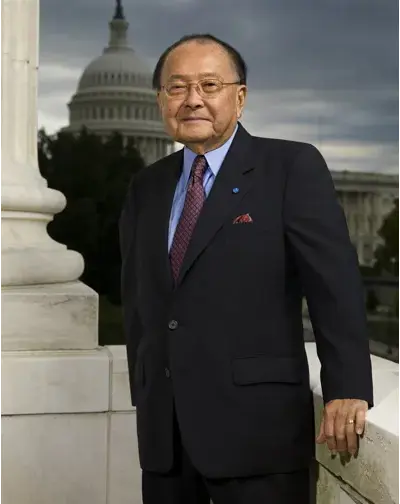
Daniel Ken Inouye was a United States Senator from Hawaii from 1963 until his death in 2012. A member of the Democratic Party, he was President pro tempore of the United States Senate (third in the presidential line of succession) from 2010 until his death. Until the inauguration of Kamala Harris as vice president in 2021, Inouye was the highest-ranking Asian-American politician in U.S. history. Inouye also chaired various Senate Committees, including those on Intelligence, Commerce and Appropriations.
