Ralph Abernathy Quotes
I have suffered as much as Martin Luther King. Only I didn't get the bullet. And I would have taken the bullet if I could have.
Abernathy, Ralph. Quoted in "Abernathy Defends Book on Dr. King." The New York Times, 13 Oct. 1989, p. A16.

25 of the Union’s TWA Airline Workers in Memphis Tennessee had signed a petition to the Union objecting to the Union’s support for King’s desegregation campaign. Quill responded by inviting King to give the main address at the annual union convention. He was prophetic of the danger King faced, but died before King was assassinated.


Hoover and the FBI were supposed to be enforcing Federal law. However, they could not find any criminal activity on the part of Martin Luther King Jr. They regarded the Civil Rights Movement as a revolutionary threat to the nation. See {620621} and {74219} . So the FBI in an incredible abuse of power, had a meeting of its top officials to plan a strategy for destroying King as a Negro leader in America. We look back on this era where officials who were never elected by anyone, and having no authority from an elected official, took it upon themselves to decide who leaders in America would be.

He had written this text on a newspaper when he was jailed in Birmingham for violating a court order not to demonstrate. A common tactic of the Southern segregationists was to have local segregationist judges issue injunctions against civil rights demonstrations on the grounds that they would promote violence. These were generally unconstitutional, but King and others were jailed until the legal appeal could even be heard.

Freedom Rides were interracial groups of Civil Rights advocates who boarded public interstate busses in Washington and rode South through some of the most segregated communities in the country. As the bus stopped at the segregated rest stops, the Black Freedom Riders would use the “white” waiting rooms, toilets, and other facilities which was against the local custom and law. Racist segregationists often brutalized and assaulted the Freedom riders whose leaders demanded Federal Protection. The Attorney General and others were trying to get the local politicians and law enforcement officials to protect the Freedom Riders, but often these were the worst of the racist segregationists. Kennedy thought if he could have a “cooling off period” for a few days, he could persuade the locals to protect the Freedom Riders from the mobs with the threat of sending Federal Marshalls or troops for the protection. So he asked Farmer and other Freedom Ride organizers to stop the Freedom Rides for a few days. This was Farmer’s famous response. The Freedom Rides continued and forced the Federal Government to respond on a timetable they did not prefer.


In the early 1950s, most of the South was racially segregated. Though hard to believe today, the Alabama law then required a Black man or woman to sit in the back of the bus. Rosa Parks, a black woman, sat in a seat in the middle of the bus and refused to give up her seat to a white man. She just quietly sat in her seat. She was arrested, and this triggered the Montgomery Bus Boycott of 1955 which was a major event in the Civil Rights struggle. Alabama was not the only state where this type of outrage occurred. The South at that time was relatively backward educationally, commercially, and legally and racial segregation was a huge problem in most of the South.


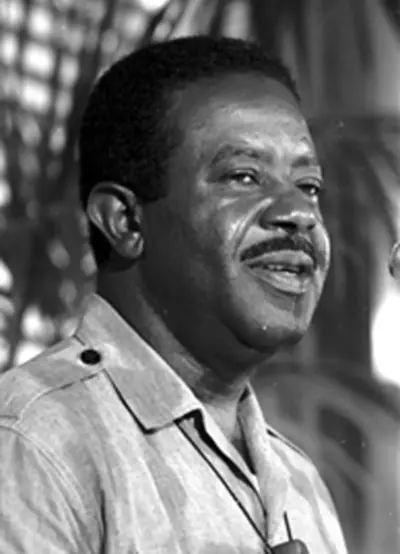
Ralph David Abernathy Sr. was an American civil rights activist and Baptist minister. He was ordained in the Baptist tradition in 1948. As a leader of the civil rights movement, he was a close friend and mentor of Martin Luther King Jr. He collaborated with King to create the Montgomery Improvement Association, which led to the Montgomery bus boycott. He also co-founded, and was an executive board member, of the Southern Christian Leadership Conference (SCLC). He became president of the SCLC following the assassination of King in 1968, where he led the Poor People's Campaign in Washington, D.C., among other marches and demonstrations for disenfranchised Americans. He also served as an advisory committee member of the Congress on Racial Equality (CORE).
